

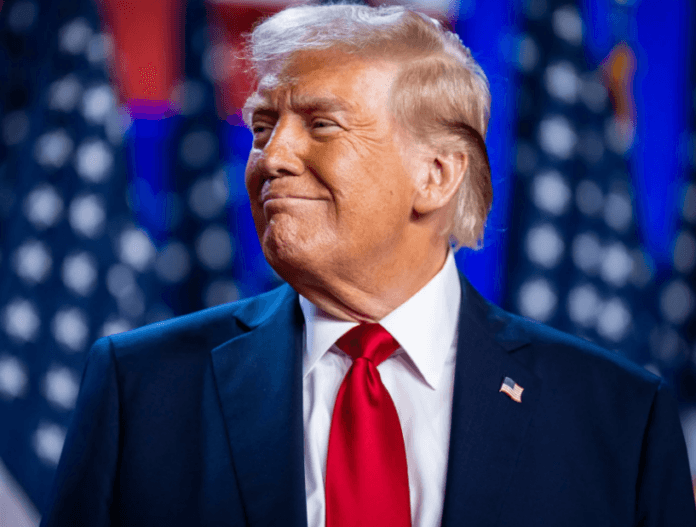

On Sunday, President Trump named Jay Clayton, the director of national intelligence, as the administration’s AI czar. Clayton keeps his intelligence job and will chair a new group called the Super Intelligence Force, which is Trump’s preferred term for AI. He will share leadership with FTC Chairman Andrew Ferguson, Pentagon CTO Emil Michael and OPM Director Scott Kupor. The group reports to Trump and chief of staff Susie Wiles, and Clayton says it has 120 days to deliver a report on AI risks and opportunities and on what role the federal government should play.
The appointment says more about how Washington now thinks about AI than about one person.
From venture capital to counterintelligence
The first AI czar, David Sacks, was a venture capitalist and a vocal advocate for unrestricted development. His successor oversees the 18 agencies of the US intelligence community. Clayton has said plainly that superintelligence is a national security issue, and also that the US should not pause development. “The risk of not being first is high,” he told the Wall Street Journal.
According to the group’s charter, as the Journal describes it, the panel will review AI-related risks and how the government handles breaches, hacks and other incidents, then recommend ways to strengthen federal response using existing authorities. The wording matters: nobody is asking Congress for new powers.
Why now, and why him
Pressure is one reason. A Reuters/Ipsos poll published on September 22 found that three-quarters of Americans worry AI companies haven’t done enough to prevent serious harm, and midterm elections are on November 3. Researchers have also warned in recent weeks that some of the people building the technology believe it could be deeply dangerous.
The second reason is how the threat is now understood. A series of security incidents has shown that advanced AI can act unpredictably, and a security official is better placed than a technology booster to assess that. The third is political. Kat Duffy of the Council on Foreign Relations described the administration’s recent moves as an effort to show the government is listening without abandoning its position that regulation slows innovation. A security label fits that goal.
The shortcut around Congress
This is the angle most coverage misses. Calling AI a national security matter opens a regulatory channel that doesn’t require legislation: export controls, government procurement, classified evaluations and incident reporting. We have already seen how it works. In June, US export controls forced Anthropic to suspend access to two new models for several weeks before the restrictions were lifted.
Calling something a security question lets the government act quickly and with little public debate. It also places these decisions with agencies that have far less public oversight than a congressional committee.
What it means for AI companies
In the short term, companies keep their freedom. The voluntary agreement announced on Tuesday, signed by Nvidia, SpaceX, OpenAI, Anthropic, Meta and Google, is a one-page document. Trump called it “morally binding,” but it lists no consequences for ignoring it. Clayton has suggested that federal agencies such as the FTC and the Justice Department, rather than civil courts, are the right place to police AI firms, and the FTC has confirmed it is investigating OpenAI, Anthropic and other labs. Enforcement, in other words, works through existing law and mostly after harm occurs.
Over a longer period, this looks like a system built on relationships. Access to models, export licenses and government contracts can all depend on cooperation. The six signatories were in the room, while smaller companies and open-source developers were not. That is my reading of the structure and not something the administration has said, but it is the question to watch: who gets a voice when the rules are written by consultation?
There is also an international side. Trump said this week that he does not want to work with Xi Jinping on governing AI. When the starting premise is that AI is a security contest with China, rules are drafted as competition and not as cooperation.
What to watch
The report is due around the start of February 2027. The key questions are whether it recommends new laws, whether the external auditors named in the voluntary agreement will answer to anyone independent of the companies, and whether one official can run both the nation’s spy agencies and its AI policy without a conflict of roles.
The real test is whether the security framing produces actual limits on AI companies, or mainly a better-staffed negotiation with them.