

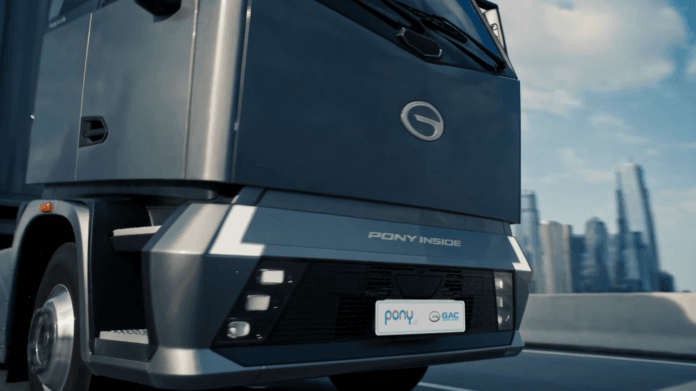

There’s a particular kind of corporate confidence you only see at a trade show in Germany. On September 14, on the press-day floor of IAA Transportation 2026 in Hannover, Pony.ai rolled out a truck. Not a concept sketch, not a rendering on a slide — an actual Level 4 autonomous heavy-duty rig, built with Chinese state-linked automaker GAC Commercial Vehicle, and the company wants you to believe it’ll be hauling freight on European roads within two years.
I’ve covered enough “world’s first driverless X” unveilings to know that the gap between a trade-show stage and a loading dock can swallow a company whole. So let’s look at what was actually shown, what it’s built on, and whether the timeline holds up.
The new truck, built on GAC’s T9 battery-electric heavy-duty platform, belongs to Pony.ai’s fourth-generation Robotruck lineup, with volume production due to start later this year and deployment planned across long-haul freight, dedicated logistics corridors, and port transportation, according to the company’s own announcement. What’s genuinely notable isn’t the reveal itself — it’s the speed. Pony.ai and GAC signed their cooperation deal on April 16, and within five months had a finished, certified truck on a European stage. That’s fast even by the standards of an industry known for slipping deadlines.
The engineering reason behind that speed is also the smartest part of the story. The Gen-4 T9 shares its compute platform with Pony.ai’s 1,400-vehicle Gen-7 robotaxi fleet, which has already cut the cost of the autonomous hardware kit by roughly 70% — not through supplier haggling, but by reusing the domain controller and sensor stack that’s already running commercially in passenger cars. It’s the same logic Tesla and Waymo have chased for years, except Pony.ai is one of the few companies actually running a large robotaxi fleet and a truck program at the same time to make that math work in practice.
And this Hannover reveal isn’t a one-off. Back in November 2025, Pony.ai unveiled a Gen-4 lineup built with SANY Truck and Dongfeng, centered on a “1+4” platooning model — one human-driven lead truck followed by four driverless ones — projected to cut freight costs per kilometer by nearly 30%. In April 2026 it showed off an L4 electric light-duty truck built with battery maker CATL for parcel and cold-chain delivery. The company says it wants 500 to 1,000 heavy-duty Gen-4 trucks running in China within two to three years, and 100,000 light-duty autonomous trucks by 2030. More than 200 Gen-4 trucks have already been on the road since November 2025, together logging over a billion tonne-kilometers of freight, and Robotruck revenue hit $23.5 million in the first half of 2026 — up 36% year-over-year, driven largely by a freight partnership with state logistics giant Sinotrans.
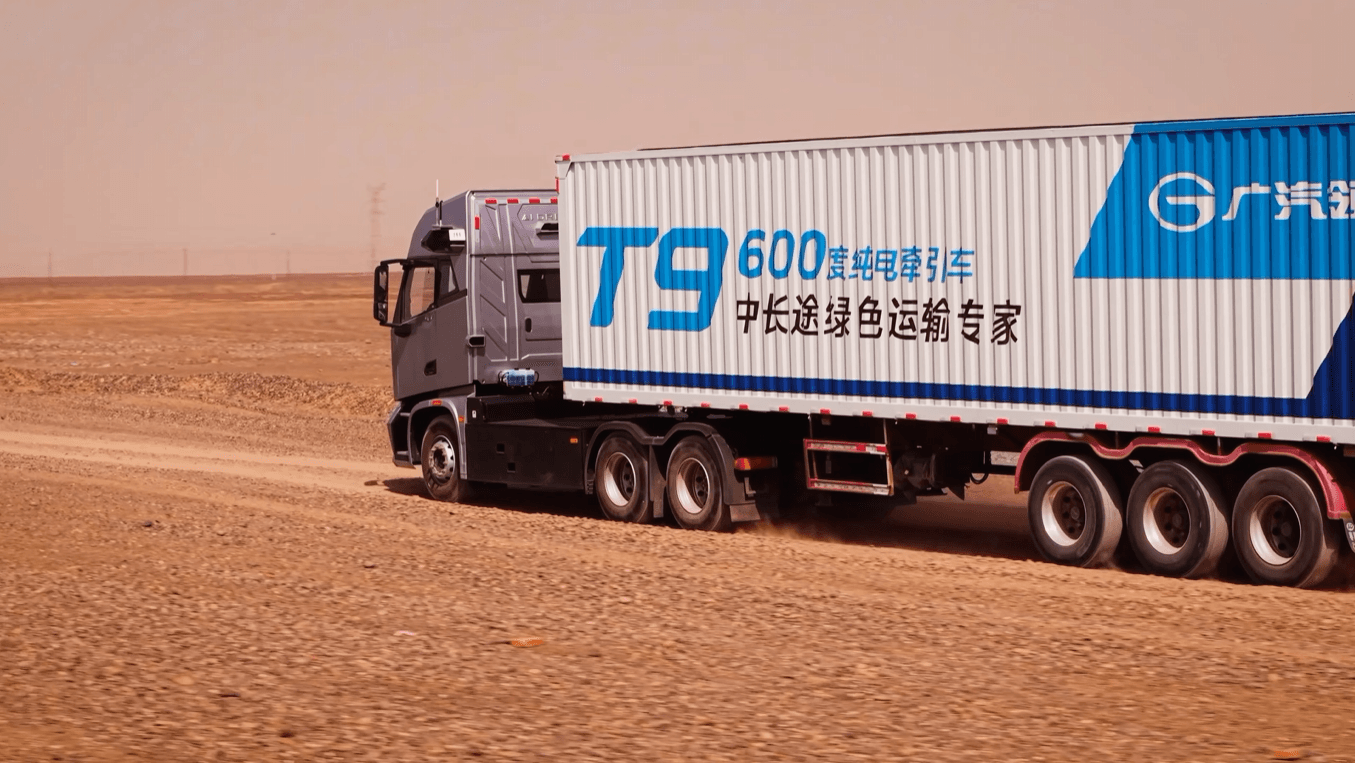
Now Pony.ai is telling European governments it wants road tests on the continent, arriving at the same moment BYD, Farizon, Sany, Sinotruk and a wave of Chinese startups are all pushing electric trucks into Europe, Reuters reported after the Hannover unveiling. Here’s where I’d push back a little on the excitement: this comes right as the EU is tightening scrutiny of Chinese industrial exports across nearly every category. A truck that drives itself and reports telemetry back to a Chinese fleet operator is going to draw a different kind of regulatory attention than a Chinese-badged EV sitting in someone’s driveway. If Pony.ai wants trucks running on German or Polish highways by 2027–28, the harder negotiation may end up being in Brussels, not in the cab.
Worth a dose of skepticism on timing, too. Pony.ai’s original SANY joint venture, signed back in 2021, promised small-scale deliveries by 2022–2023 and mass production by 2024. It’s 2026, and “mass-scale production” is still described as starting “later this year.” That’s not necessarily broken vaporware — certifying driverless heavy trucks is genuinely hard, and the revenue and mileage numbers are real, audited progress. But it’s a pattern worth remembering. The stock market seems to agree the story is unresolved: PONY shares have swung from about $4 to nearly $24 over the past year, with single-day moves of 7–14% on nothing more than a headline — a company Wall Street hasn’t decided how to value yet.
It also helps to see this against the rest of the field. In the US, Aurora and Kodiak are inching from pilots into paid commercial routes, while Waymo quietly paused its own trucking unit years ago to focus on robotaxis — a reminder that even Alphabet’s money didn’t make freight autonomy easy, and TuSimple abandoned the US market altogether. The contrast is telling: American players are mostly cash-burning startups waiting on an IPO payoff, while Pony.ai leans on state-linked manufacturing partners and a home market willing to certify and deploy fast. Whatever you think of the politics, that’s a real structural edge in getting metal on the road — and exactly why Western regulators are starting to look twice.
My take: the T9 is genuine progress, not vaporware — the shared robotaxi/robotruck architecture is a smart cost play, and the revenue backs up real commercial use. But “later this year” and “within two years in Europe” are promises this company has stretched before, and the European ambitions are walking straight into a trade fight that has nothing to do with braking redundancy. Watch Brussels before you watch the assembly line in Guangzhou.