


3D movies were once labeled one of the biggest tech flops of all time. Now they’re getting a second chance, and this time the push comes from streaming services and headset makers, not TV manufacturers. According to The Verge, Meta is working with Hollywood to bring 3D movies to its headsets, and the technology to enjoy them is finally ready.
Why 3D never worked the first time
The idea of 3D was fine. The execution kept costing viewers something. Cinema glasses split a single reflected image between two eyes, which cuts both resolution and brightness roughly in half. Shutter glasses, which were also used with the 3D TVs of the 2010s, trade that for a lower refresh rate and flicker. The Nintendo 3DS lost resolution. The conclusion of the journalists who tested the new gear is that almost every 3D format took away something you cared about.
A screen for each eye
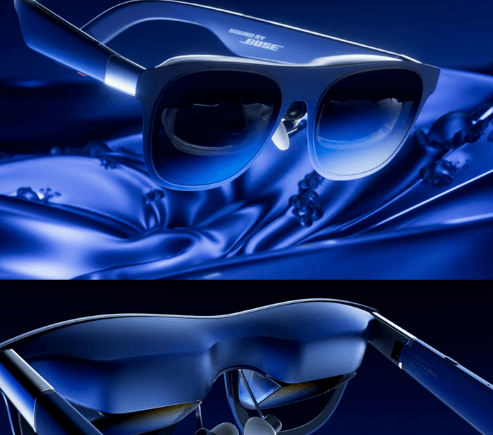
Video glasses and VR headsets avoid the problem by giving each eye a separate display. Testers tried this with Xreal glasses connected to a handheld, a laptop or a phone over USB-C. Switch to side-by-side 3D mode and each eye sees a full 1080p image. Meta Quest and Steam Frame video apps have similar toggles, and Apple Vision Pro and the upcoming Meta VR Glasses can stream 3D films natively.
The test results are striking. In Moana, the parting ocean looks like a living body of water rather than a flat wall. Glass objects gain the most: cockpits in Gravity, helmets, the clock in Zootopia 2 and the lightcycles in Tron: Legacy all show extra depth, down to scratches and reflections. The holographic displays in Avatar’s ops room stand out. Herzog’s documentary Cave of Forgotten Dreams gains a new dimension too, because the 32,000-year-old cave paintings follow the curves of the rock.
One warning: movies converted to 3D after filming often show a “billboard” effect, with flat layers of people and objects instead of true depth.
The catch: finding the movies
The main obstacle is not the hardware but the supply. 4K Blu-ray doesn’t support 3D, so the last 3D discs are limited to 1080p, 24 frames per second and no HDR. The reviewer had to buy one title on eBay and import another from Thailand. The workaround is ripping discs at home with MakeMKV and BD3D2MK3D, which takes more than an hour per film.
Apple versus Meta
Apple got there first. The Vision Pro launched in 2024 with 3D in 4K and HDR, spatial audio and the largest 3D catalog, including most of Disney’s library on Disney Plus. Some Avatar films run at 48 frames per second, and many films you already own in 2D get a free 3D upgrade. The price is $3,500.
Meta is now closing the gap. Sarah Malkin, Meta’s director of entertainment, confirmed that 3D films will stream on the $350 Quest 3S, the $600 Quest 3 and the new $1,300 Meta VR Glasses. Disney Plus, HBO, Paramount Plus and Peacock will carry them, some starting later this fall. By the time the glasses launch, Malkin says, there will be “hundreds of 3D films,” priced in line with regular 2D UHD movies. A full charge should cover one 3D movie in Theater mode, since the glasses have about three hours of battery life.
Industry reports add that Meta announced the glasses on September 23, with sales starting in spring 2027. Disney Plus subscribers in select countries will get 3D versions of The Avengers and Black Panther in November, and James Cameron’s Lightstorm Vision is developing new films made for 3D.
What this means
The two products split on price and timing. Apple’s headset costs nearly three times as much as Meta’s glasses, but you can buy it now. Meta is cheaper and has broader deals with studios, but its glasses are months away, so the cheapest way in today is a Quest at $350 to $600.
The bigger story is who’s pushing 3D this time. Hardware makers need content to justify their devices, and studios are suddenly willing to open their 3D vaults. That is a different dynamic from the 3D TV era, when manufacturers waited for content that never came. The risks remain: $1,300 is a lot for a movie screen, some deals are limited to select countries, and “hundreds” of titles is not yet a library.