

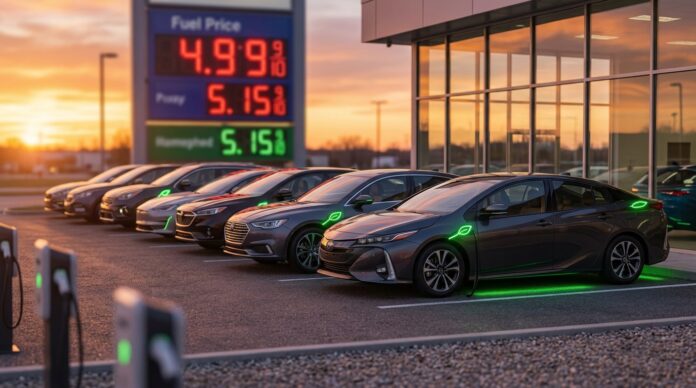

Hybrid car sales in the United States hit new records in the third quarter as higher fuel prices pushed buyers toward more efficient vehicles, and the results show a clear divide: Asian automakers with broad hybrid line-ups gained ground, while the Detroit Three, Ford, General Motors and Stellantis, had few hybrids to offer. CNN reported the trend on October 2, as quarterly sales figures came in.
The quarter in numbers
Overall US sales were roughly flat. Cox Automotive had forecast about 4.12 million vehicles for the quarter, slightly below a year earlier, and said the Detroit Three were heading for their lowest combined market share on record, just over 36% (Cox forecast).
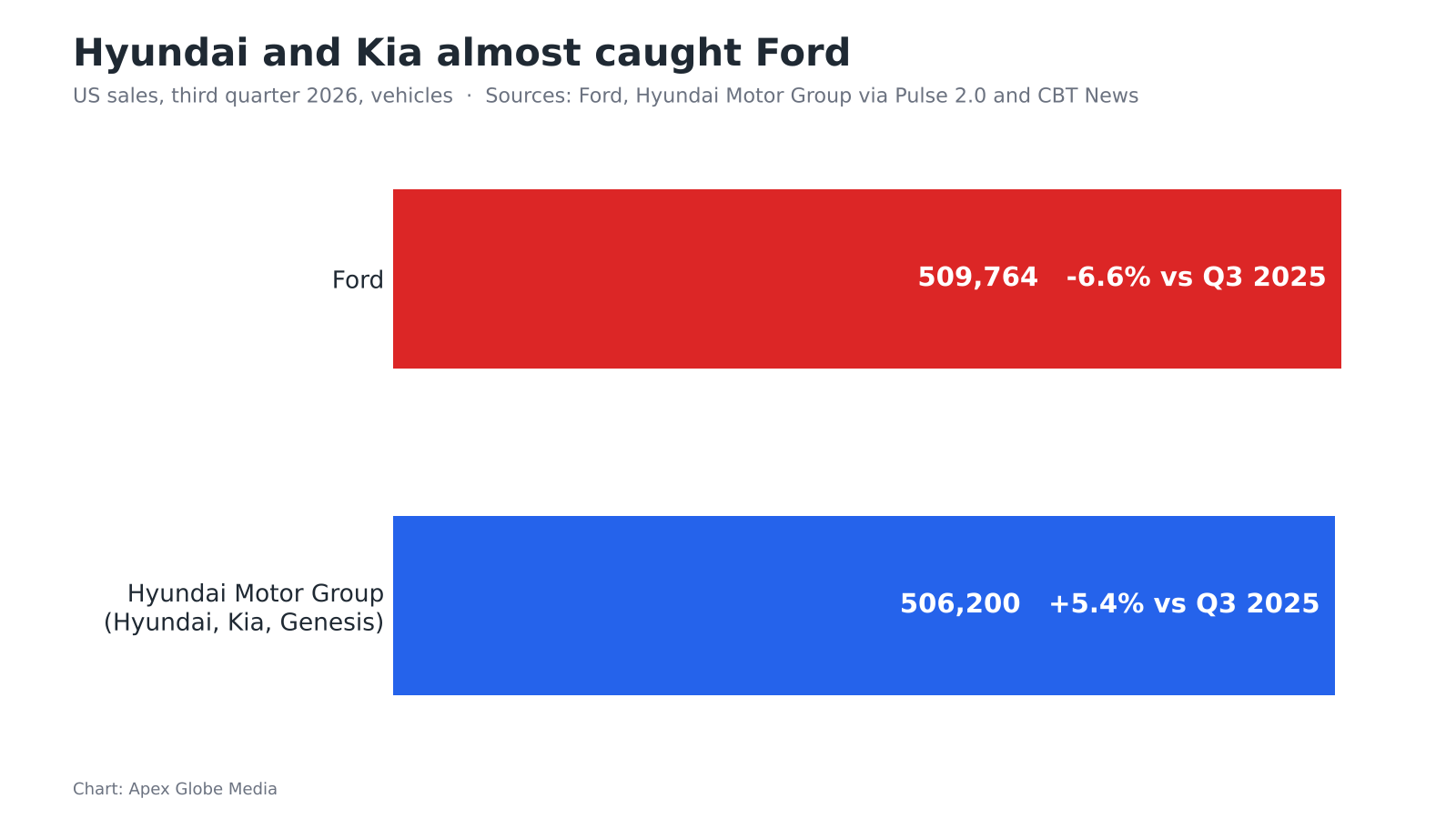
- Ford sold 509,764 vehicles in the US, down 6.6% year on year (Ford results via Pulse 2.0). Ford says that, excluding the Escape and Lincoln Corsair it is phasing out, its volume was roughly flat.
- Hyundai Motor Group (Hyundai, Kia and Genesis) sold about 506,200, up 5.4%, nearly overtaking Ford for the first time. Ford points out that Hyundai and Kia are separate brands in the US.
- Hyundai’s hybrid sales rose 39% in September to 21,578 vehicles, about 28% of its monthly sales, and Kia’s hybrid deliveries rose 152% in the same month (CBT News). These are monthly, not quarterly, figures.
- Ford’s own Maverick Hybrid pickup had a record quarter, 27,793 units, up 59.6%.
Hybrid, plug-in, electric: the difference
A hybrid combines a petrol engine with a small battery and electric motor that recharge while driving; it never needs to be plugged in and typically uses noticeably less fuel. A plug-in hybrid has a larger battery that can be charged from the grid for short all-electric trips. A battery-electric vehicle (EV) has no petrol engine at all. For a buyer who wants lower fuel bills without changing habits or installing a charger, a regular hybrid is the cheapest step, and since the federal EV tax credit ended in 2025, it is often the most attractive one.
Why Detroit has few to sell
For years Detroit carmakers concentrated on large pickups and SUVs, where margins are highest, and cut many smaller and more efficient models. Ford’s hybrid range is now concentrated in trucks such as the Maverick and F-150, and it is ending production of the Escape, which was offered as a hybrid. CNN noted that GM sells very few hybrids and Stellantis is pulling back on plug-in hybrids in North America. New models take years to develop, so the gap cannot be closed this quarter or next. Toyota, Honda, Hyundai and Kia, by contrast, kept investing in hybrids.
Ivan Drury of the car-buying site Edmunds told CNN that buyers were choosing the option that fits their needs at a lower price, and stressed how hard it is to win back a customer who has switched brands. That is the long-term risk: a household that buys its first Toyota or Kia hybrid this year is likely to consider the same brand next time.
Washington is loosening the rules
The policy backdrop points the other way. On September 28 the National Highway Traffic Safety Administration published a final rule weakening corporate average fuel economy (CAFE) standards, the fleet-wide fuel-efficiency targets carmakers must meet. The rule sets a target of 34.9 miles per gallon for model year 2031, compared with about 50.4 under the previous rules, and ends credit trading in 2028. On October 2, California and 25 other states sued, arguing the rule is arbitrary and ignores Congress’s requirement to set the “maximum feasible” standard (Al Jazeera). The Transportation Department says the rule will lower the average price of a new car by $1,300.
Looser standards reduce the regulatory push to build efficient cars at the moment buyers are asking for them. The same tension is visible in Europe, where Volkswagen’s CEO warned of enormous pressure on traditional carmakers.
Our take
The third quarter shows that the market, not regulation, is now driving the shift to efficient cars, and hybrids rather than pure EVs are the main winners. Ford’s flat underlying volume and record Maverick Hybrid sales show that the demand exists for Detroit too, but the line-up is too thin. The weakened fuel-economy rules may save Detroit penalties in the short term while leaving it less prepared if fuel prices stay high. For dealers and fleet buyers, hybrid supply, not price, is likely to remain the constraint into 2027.