



One of America’s oldest tech companies is closing a door that thousands of foreign engineers have walked through. IBM will stop sponsoring H-1B visas and green cards for most roles in IBM Consulting, its largest division, Bloomberg reported on November 10. The IBM H-1B decision affects a unit with more than 150,000 workers and comes as Washington tightens the rules on skilled-worker visas.
IBM confirmed the change. A spokesperson said the company will “discontinue visa and green card sponsorship for the majority of such roles in IBM Consulting”. The spokesperson explained that the unit had used skilled visa programs to address skill shortages, and that participation has declined as the company reassessed skills and client needs.
Move abroad or leave
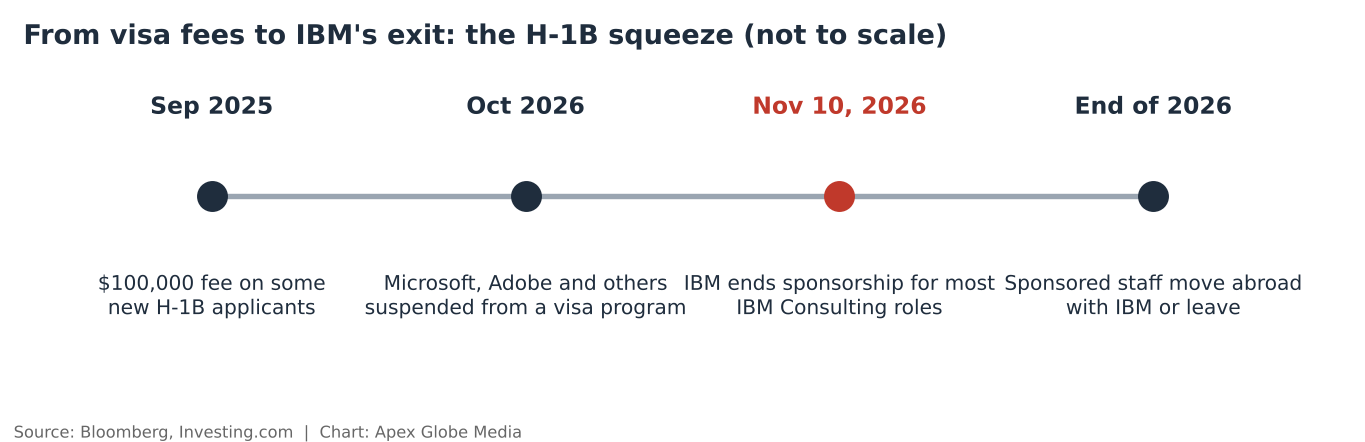
The change is not only about new hires. According to a document shared with managers and seen by Bloomberg, workers who are now on sponsored visas in the affected roles can continue working for IBM in a role outside the United States, or leave the company at the end of the year. That gives some employees only weeks to decide whether to relocate, look for a new US sponsor, or leave the country.
For many of them the green card part hurts most. A green card process can take years, and losing the sponsor in the middle often means starting again with a new employer, if one is willing. IBM did not say how many workers are affected. IBM shares fell about 1% after the report, Inkl noted.
The timing is tough for another reason. Workers on an H-1B visa who lose their job usually have a grace period of up to 60 days to find a new sponsor, change their status or leave the US. A move to an IBM office abroad may keep a paycheck, but it can also mean uprooting a family, children’s schools and a spouse’s career. For people who were years into the green card queue, the choice IBM offers is between giving up on permanent residence in America or giving up their employer.
The policy pressure behind it
IBM is making the move while the US administration squeezes the visa programs that tech and consulting firms rely on. In September 2025 President Donald Trump introduced a $100,000 fee on some new H-1B applicants, and the administration has proposed lottery rules that favor higher-paid job offers. Parts of those changes are tied up in the courts. Last month the government also suspended Microsoft, Adobe and several other companies from using a worker visa program, citing abuse.
Consulting is where these rules bite hardest. IT consulting firms have long been among the largest users of H-1B visas, because they place engineers at client sites for long projects. When each new visa may cost $100,000 and the lottery favors higher salaries, bringing in a mid-level consultant from abroad stops making business sense.
AI changes the math too
IBM’s own explanation points to “skills and client needs”. In plain words, the work consulting clients pay for is changing. Much of the routine coding, testing and system integration that used to need large teams is now partly done with AI tools, including IBM’s own. That is the same shift behind the drop in entry-level coding jobs that we covered when computer science enrollment fell 12%.
IBM can also do much of that work from its large delivery centers in India and other countries. Moving sponsored staff into roles outside the US keeps their skills inside the company without the visa cost or the political risk.
Our take
IBM’s decision is a signal, not just an HR change. When a 115-year-old company with deep government ties quietly pulls back from visa sponsorship, it tells you how expensive and uncertain the H-1B route has become. Other consulting and outsourcing firms are likely to follow, either openly or by simply sponsoring fewer people.
The losers are clear: foreign engineers who built careers in the US and now face a deadline. The bigger question is what happens to American tech. If companies respond to visa costs by moving work abroad rather than hiring locally, the policy will not create the US jobs it promises. And with AI tools cutting the need for large consulting teams, some of those jobs may not come back anywhere.