


The week of outages that grounded US flights, froze bank payments and took down the NSA’s classified network may have a common thread after all, and it is not a hacker. Wall Street executives and the National Security Agency have told members of Congress that the failures came from rushed fixes for AI-found vulnerabilities, The Washington Sun reported on November 17, citing three people familiar with the private conversations. AI models did not break the systems, the sources said. They found so many security holes that the race to patch them before attackers could strike overwhelmed systems that were never built for that pace.
“These models are identifying massive vulnerabilities, and that increases the urgency to patch right away,” one congressional official briefed on the matter told the paper. “They’re trying to push through a lot of patches all at once — more than the system was designed for.”
It is the most complete explanation yet for a run of failures that began on November 12 and that we covered as it happened, most recently when the NSA’s network and Apple went down on the same day. It is also, so far, only partly on the record.
The one link an official has confirmed
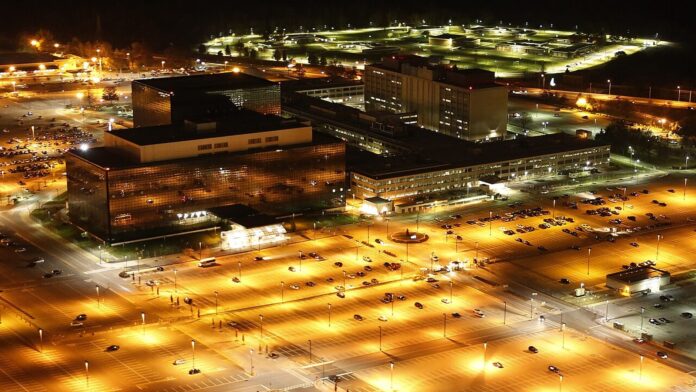
The clearest statement came from Director of National Intelligence Jay Clayton. Speaking to Fox Business on Tuesday, he tied the NSA failure to patches for a flaw in PHP, the programming language that runs a large share of the world’s websites. “The patching that has gone on following [a PHP vulnerability] has caused some of these systems to not come back up when you patch them as expected,” Clayton said. “Some systems have to hand off to other systems, and those handoffs are not coming as expected. That is what has happened at the NSA today.”
Clayton also said: “We do not see the indicia of a coordinated cyber attack.” The NSA itself has only said that “scheduled routine maintenance” caused the “temporary degradation” of some networks.
The PHP flaw he referred to is almost certainly PHP2Shell, a set of critical bugs tracked as CVE-2026-109618 and CVE-2026-109619 that the PHP project patched in an emergency release on October 21. The bugs were found with AI. Security firm Calif found one of them using OpenAI’s GPT-5.6 Sol model, and cloud security company Wiz independently found both using its own tooling together with Google’s Gemini 4 Argon and GPT-5.6 Sol. Wiz said the flaws affected software running about 70% of the internet. Hackers moved quickly to exploit them, which is exactly why organisations felt they could not wait to patch.
What the companies have said
None of the private companies has publicly blamed AI, and their own explanations are specific. JPMorgan Chase spokesman Joe Evangelisti said Monday’s banking problems came from a software bug in an on-premise hardware system and were not cyber-related. Microsoft said its November 12–13 Outlook and Microsoft 365 outage was caused by a bug from a July update that only showed up under heavy traffic while some servers were offline. Apple said an “internal update caused some outages.” The FAA traced its nationwide ground stop to a router installed during copper-to-fiber work in Arkansas that flooded the network with connection requests, and FAA Administrator Bryan Bedford said there was “zero evidence of anything AI-related.”
Those accounts do not contradict the Washington Sun report so much as describe its mechanics. Updates, bugs from updates and new hardware installed in a hurry are what a patch rush looks like from the inside. But the public record does not yet show that every one of these failures was caused by AI-driven patching. Outside the NSA, the link rests on anonymous sources, and an overview by Implicator makes the same point. Christiaan Beek of security firm Rapid7 said nothing public suggested rushed security updates were behind the outages, though he argued that old processes become riskier as AI increases the number of flaws.
Washington’s mixed message
Officials agree on one thing: this was not an attack. Secretary of State Marco Rubio said on Tuesday that “we have zero evidence whatsoever” linking the incidents to each other. Homeland Security Secretary Markwayne Mullin told CNBC that “they’re pushing new technology on top of really old computer systems, and it just seems to overwhelm the system,” and added: “We’re going to see more of this as new technology rolls out.”
Senator Mark Warner of Virginia went further toward the AI explanation. “AI is making it possible to identify vulnerabilities across enormous numbers of systems at unprecedented speed,” he said in a statement, adding that “it feels like every day brings another reminder that AI is moving faster than our ability to manage its consequences.” On Wednesday, Senators Maria Cantwell and Mike Rounds sent Clayton a letter warning that US cyber defences are not keeping pace with AI-enabled threats.
Outside government, the theory had already spread. Former New York Times cybersecurity reporter Nicole Perlroth argued in an X thread viewed more than a million times that AI has sharply sped up the discovery of software flaws, pushing companies into patches that can fail in cascades. “We never stopped to ask: SHOULD WE?” she wrote. Nathan Calvin of the AI policy group Encode saw a positive side: “There’s some sense in which this is reassuring, in that it means there’s not an attack.” He also warned that updating legacy systems “is going to be a rocky process.”
The next patch is already here
If the theory is right, the pressure is not about to ease. This week Calif disclosed Java4Shell, a critical flaw in the Base64 decoder of OpenJDK, the open-source core of Java, tracked as CVE-2026-114938. Calif says it found the bug with OpenAI’s GPT-6 Cyber, a model offered only to approved security researchers, and coordinated the disclosure with the Five Eyes intelligence alliance and major vendors. According to Calif’s testing, an attacker without an account could run code on Jira, Jenkins, Keycloak and other widely used business applications.
The reach is narrower than the name suggests. The flaw affects Java 17.0.6 and later, but only on Intel and AMD servers whose chips support a feature called AVX-512 VBMI; Java 8 and 11 and ARM servers are not affected, The Hacker News reports. Oracle shipped fixed builds on November 17 and CISA urged organisations to patch immediately. Red Hat and several other Java distributions had not released fixes yet. Canada’s Cyber Centre said it was not aware of any attacks, and other labs have reproduced crashes but not remote code execution.
Java runs a huge share of corporate back-end systems, including at banks and government agencies. That means the same organisations that spent last week recovering from outages now face another urgent round of updates, one week later. It is the dynamic we described when Google found an AI tool that turns security patches into attacks: once a fix is public, attackers with AI can study it quickly, so the time defenders have to install it keeps shrinking.
Our take
The patch-rush explanation fits the facts better than anything else on offer, but it is not proven, and officials should say clearly which outages it covers instead of letting anonymous briefings fill the gap. Even so, the lesson does not depend on the details. AI has made finding bugs cheap, while testing and deploying fixes in old, tangled systems is as slow and risky as it was before. Until that changes, the choice for banks, airlines and agencies is not between patching and safety: it is between staged, well-tested rollouts and the kind of week America just had. Funding that unglamorous engineering work matters more now than any new AI security model.