

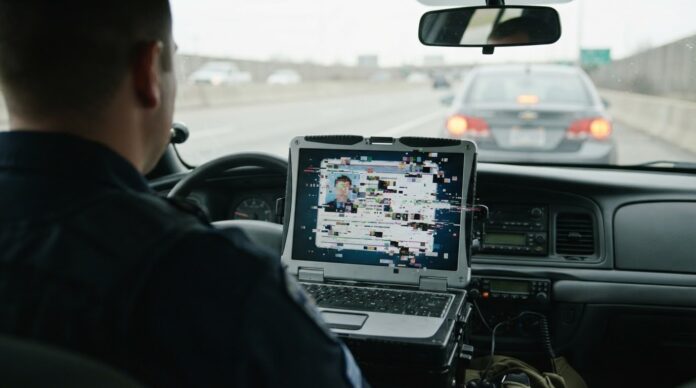

Hackers have broken into the NCIC, the FBI’s National Crime Information Center, the database that police officers across the United States query to check warrants, stolen cars and gun-purchase denials. CNN first reported the intrusion, citing two people briefed on the investigation, and Fox News confirmed it with three sources on Saturday. The FBI has not commented publicly, and investigators are still working out how the attackers got in and what, if anything, they took.
It is the second known break-in at the bureau in about two months, and it lands in a week when the US government has spent most of its energy explaining that a string of outages at banks, the FAA and the NSA were not cyberattacks. This one, by every account so far, is.
What the NCIC is, and why police depend on it
The NCIC has been running since 1967. It is less a single database than a shared switchboard: federal, state, local and tribal agencies enter records, and any authorised officer can search them in seconds. According to the FBI’s own 2023 review of its criminal justice systems, the NCIC held more than 18 million active records in 22 files and handled an average of 11 million transactions a day.
Those files cover wanted and missing people, outstanding warrants, protection orders, registered sex offenders, stolen vehicles, guns and licence plates, and people who have been denied a firearm purchase. When a patrol officer runs a plate at a traffic stop, the answer about whether the driver is wanted, or whether the car is stolen, usually comes from the NCIC.
Jason Pack, a retired FBI supervisory special agent who worked on cybercrime, described it to Fox News as “America’s computer for law enforcement.” He said roughly 56 state terminals pass its data on to hundreds of thousands of computers in patrol cars, and that the system has more than 100,000 users. It does not hold classified intelligence or FBI case files, he said, but it does store personal data such as names, dates of birth and Social Security numbers.
What is known about the intrusion
Very little has been confirmed. The sources who spoke to Fox News said the FBI is trying to identify the point of entry and that it is not yet clear what information was compromised. CNN reported that it is unclear whether the attackers reached sensitive records or affected the system’s availability to police. There has been no sign of an outage: Pack said there was no indication that records had been changed or that the system was down.
Nobody has claimed responsibility in public, and no group has been named. That separates this case from the September attack on the bureau’s jobs portal, which an extortion group called ShinyHunters claimed. That group said it had stolen personal details of almost every FBI agent, including home addresses and Social Security numbers. A Canadian cybersecurity executive, Edward Dubrovsky, was arrested on October 8 and faces charges in that investigation, though the court records are sealed. There is no public evidence so far that the two breaches are linked.
Pack said investigators would go through IP logs and metadata to test three likely routes in: a stolen password belonging to one of the system’s many users, a compromised state terminal, or a third-party contractor. With 100,000-plus accounts spread across thousands of agencies, the first of those is the easiest to imagine, because a single police department with weak password practices can become a door into the national system.
Stolen data is bad. Changed data is worse
Most data breaches are about theft: names and numbers copied and sold. The specialists quoted this week are more worried about integrity, meaning whether the records can still be trusted.
A former FBI official who led investigations into cybercriminal groups told CNN: “My concern isn’t simply whether hackers gained access to sensitive information, although that is an issue, but whether they could compromise the accuracy of the information that officers rely on.” Pack put it more bluntly: “What they worry about is if any of this data has changed, then it might affect officers’ safety on the side of the road.”
It is easy to see why. If a warrant record for a violent suspect disappeared, an officer could let a dangerous person drive away. If a false record appeared, an innocent driver could be treated as armed and wanted. If entries for stolen guns or protection orders were edited, the damage could go unnoticed for months. That is why the FBI’s first task is less about counting stolen records and more about proving that the remaining ones are still correct, which is slow, unglamorous work across millions of entries.
A government under pressure on cybersecurity
The timing is awkward for the administration. Over the past two weeks it has tried to calm public worry after failures at the FAA’s air traffic control network, at major banks and at the NSA. Officials insisted those were technical faults, not hacks, and the White House removed its national cyber director, Sean Cairncross, after the outage wave. Our earlier reporting covered how rushed fixes for flaws found by AI tools were blamed for several of those outages.
On Thursday, after bureau officials had learned of the NCIC incident, FBI Director Kash Patel appeared on Fox News to praise the FBI’s cyber work and spoke about Operation Winter Shield, a campaign urging companies to update their systems, as if it were still under way, CNN reported, although it had ended months ago. “We are staying ahead of the curve and making up for lost time,” he said.
President Donald Trump, asked about the breach by Fox News on Saturday morning, said he had “just heard” about it. “I will say that it’s not good. I don’t like that,” he said. He then wondered aloud whether the breach might reveal information about the FBI’s Russia investigation, according to CNN, and declined to share details about the intrusion itself.
The FBI is not the only agency dealing with an intruder this week. Nextgov/FCW reported that the Department of Agriculture took numerous applications offline after its security operations centre “uncovered a security incident,” forcing staff to reset all database passwords. The outages hit tools that handle payments to farmers. It is not clear who was behind that intrusion either, or whether data was taken. Fox News also pointed to a recent Government Accountability Office finding that 17 of 22 federal agencies did not comply with federal cybersecurity rules.
What happens next
The questions that matter are simple, and the FBI has not answered any of them yet: how the attackers got in, how long they were inside, which files they could read, and whether they could write. Until the bureau says whether records were altered, every police agency that relies on the NCIC is in the uncomfortable position of trusting a system that may have been tampered with.
For ordinary people, the most direct risk is the personal data in the system. If names, dates of birth and Social Security numbers were copied, that information could feed identity fraud for years. Anyone who has had contact with the criminal justice system, been the subject of a protection order, or reported a stolen car or gun could be in the database.
Our take
The NCIC is one of the oldest and most widely shared databases in American government, and its strength is also its weakness: the more agencies that can read and write to it, the more doors there are to guard. The most important thing the FBI can do now is be specific, quickly, about whether any records were changed, because police will keep running plates tonight either way. A breach of a jobs portal is embarrassing. A breach of the system that tells an officer who is in the car in front of them is a public safety problem, and it deserves more than “not good.”