

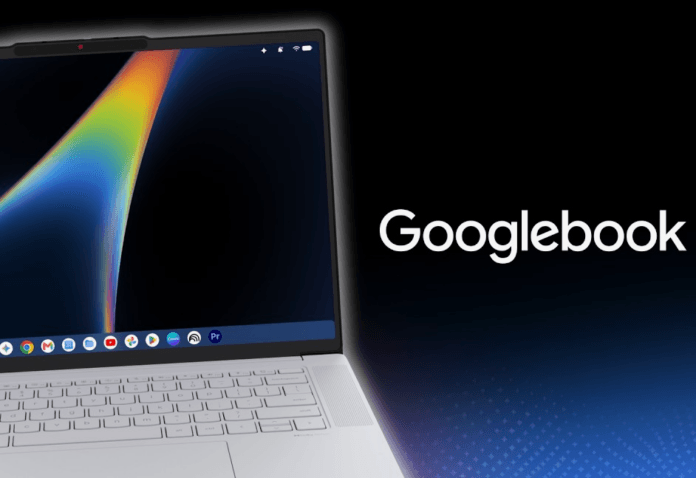

Alphabet’s decision to open pre-orders for its $899 Googlebook marks a calculated gamble to redefine ChromeOS from an educational budget staple into a serious enterprise and personal computing tier. With hardware partners like Acer, Asus, Dell, HP, and Lenovo supplying initial models powered by Intel and Qualcomm silicon, Google is making its most aggressive push into high-margin hardware since the sunset of the Pixelbook line.
The timing reflects a distinct pivot in personal computing strategy. Historically, Google dominated schools and price-sensitive consumers with low-cost Chromebooks, while Apple captured the upper tier with premium MacBooks. However, Apple’s recent move downward with the $699 MacBook Neo compressed the entry-level market, forcing Google to defend its ecosystem by moving upscale. Rather than competing on razor-thin margins at the bottom, Google is attempting to carve out a mid-premium wedge between budget laptops and thousand-dollar flagship devices.
At the technical core of the Googlebook is a structural merger of Android’s mobile architecture with ChromeOS’s desktop foundations. Rather than running mobile apps in crude emulation, the dual-stack operating system allows users to pass active tasks between phones and laptops while embedding Gemini directly into the system layer. Users can query the assistant about content rendered anywhere on screen or automate document formatting natively, attempting to turn AI from a standalone web tool into an ambient OS function.
Whether this hybrid approach offers enough utility to lure consumers away from Windows and macOS remains an open question. Previous hardware showcases like the 2017 Pixelbook and 2019 Pixelbook Go suffered from a fundamental mismatch: high-end price tags paired with lightweight software that struggled to handle legacy desktop workflows. While native Gemini utilities and tighter Android handoffs improve everyday continuity, Google still faces the challenge of convincing power users that a cloud-centric operating system justifies an $899 entry point.