

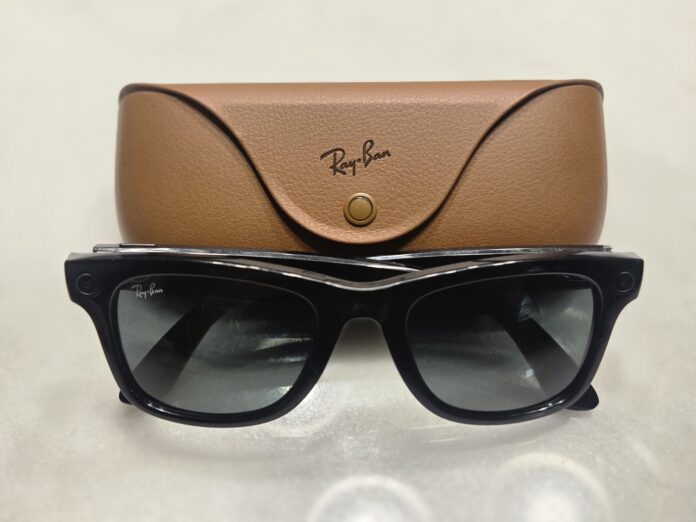

A Meta glasses court ban now applies across England and Wales. His Majesty’s Courts & Tribunals Service (HMCTS), which runs the criminal, civil and family courts, has confirmed that visitors who bring Meta smart glasses into court buildings will have them confiscated at the entrance, Legal Cheek reported, citing The Guardian.
“Users who bring Meta glasses into courts or tribunals will have them confiscated on entry and they will be returned when the owner leaves the building,” an HMCTS spokesperson said. “There are clear restrictions on taking images or videos within courts and tribunals which is why the use of Meta glasses is prohibited.”
An old rule meets new hardware
Taking photos or recording inside a court building in England and Wales is already banned without official permission. A breach can be treated as contempt of court, which can be punished with up to two years in prison, a fine or both, according to government guidance.
Smartphones are still allowed, as long as they are not used to record. The difference is visibility. Someone filming with a phone has to hold it up, which court staff can see. Meta’s Ray-Ban glasses have a small camera built into the frame and can record photos and video while the wearer looks around normally. That discretion is the main appeal of the product, and it is exactly why courts do not want it inside, The Next Web noted.
The case that raised the alarm
The ban follows a High Court case decided earlier this year. During a trial in January, a claimant, Laimonas Jakstys, was found to have been “assisted or coached” through smart glasses while being cross-examined in a dispute over the directorship of a property company. The judge, ICC Judge Agnello KC, noticed that he paused often before answering. After his opponent’s barrister asked whether he might be wearing smart glasses, the judge ordered the glasses and his phone to be handed over. She found him “untruthful in denying his use of the smart glasses” and rejected his evidence entirely, the Law Society Gazette reported. He denied being fed answers.
The case showed a risk that goes beyond recording: a witness could receive instructions in real time from someone outside the courtroom, without anyone noticing.
Not just a British issue
New York’s court system announced a similar ban in July. In February, during a social media addiction trial in Los Angeles, Superior Court Judge Carolyn Kuhl warned members of Mark Zuckerberg’s team who had arrived wearing Meta glasses that anyone who recorded with them would be held in contempt. “If you have done that, you must delete that, or you will be held in contempt of the court,” she said, Fortune reported.
Courts are only the latest venues to act. In the UK, a number of restaurants, pubs and theatres, as well as the UK organiser of Comic-Con, have already banned the glasses. Meta sold about seven million pairs last year, priced between £269 and £469 in the UK, so they are no longer a rare gadget.
Meta’s response
Meta declined to comment on the court policy. The company has pointed to the LED light on the frame that pulses when the glasses are recording, and to tamper-detection technology meant to stop users from covering it. Those features help in a street or a shop, where people can see the light. In a courtroom, where recording can affect the fairness of a trial, officials have decided that a small light is not enough.
Some questions remain open. HMCTS has not said how security staff will tell Meta glasses apart from ordinary glasses, or whether the rule also covers smart glasses from other brands.
Why it matters for businesses
Smart glasses are moving from early adopters to the mainstream, and every new ban shapes where people can use them. For employers, the court decision is a useful example. Offices with confidential meetings, hospitals, banks and factories with trade secrets all face the same problem as courts: a camera that others cannot easily see. Companies should decide on a policy before an incident forces one. Privacy failures are also becoming expensive for technology companies, as TikTok’s child privacy settlement showed.
Our take
The ban is sensible. Courts depend on witnesses, jurors and victims being able to speak without fear of being filmed, and the Jakstys case showed that the glasses can also be used to interfere with evidence. But naming one company’s product is a short-term fix. More brands are launching camera glasses, and a rule written for “Meta glasses” will soon look out of date. A clear ban on all wearable cameras in court buildings would be easier to enforce and fairer to everyone.