

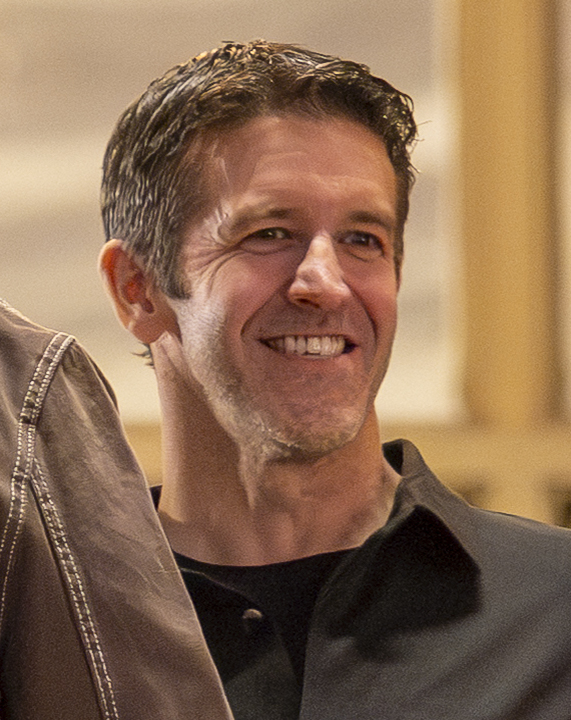

John Ternus became the new Apple CEO on September 1, taking over from Tim Cook after 15 years in which Cook turned Apple into one of the world’s most valuable companies. Apple shares rose 3% on Ternus’s first day, CoinCentral reported. Cook moves to the role of executive chairman, and Apple first named Ternus as his successor in April.
Ternus inherits a company with record iPhone sales and strong finances, but also a growing problem: the race for artificial intelligence talent, and the risk that AI companies take control of how people use their devices.
Who John Ternus is
Ternus, 51, has spent 25 years at Apple. He joined the product design team in 2001 straight after earning a mechanical engineering degree from the University of Pennsylvania. He became vice president of hardware engineering by 2013 and senior vice president in 2021, and was the youngest of the candidates considered to replace Cook.
He has overseen many of Apple’s biggest hardware launches, including AirPods, the Apple Watch and the Vision Pro headset, and most recently worked on the MacBook Neo, Apple’s lower-cost laptop. Colleagues describe him as humble and easy-going.
His first message to staff was about products. “We have a huge launch next week that’s going to be phenomenal. Thanks for everything you’ve all done to make it possible,” he wrote, pointing to Apple’s annual product event on September 9.
The talent problem
Not everyone was focused on the product pipeline. Gene Munster of Deepwater Asset Management, a long-time Apple analyst, said on Ternus’s first day that the most pressing issue was talent retention. He pointed to OpenAI’s push to recruit Apple engineers.
The dispute has become public. Apple has filed a trade-secrets lawsuit over the hiring, and OpenAI responded that “Apple cannot stop the next 400 employees from leaving by filing baseless lawsuits.” For a company whose strength depends on combining hardware and software, losing specialised engineers to AI labs is a real risk.
Apple’s advantages
Munster also acknowledged Apple’s strengths. “It’s easy for OpenAI to design one or two consumer devices,” he said. “The difficult part is designing, manufacturing, and distributing a family of devices and services at a price point that consumers can afford.”
That is where Ternus’s background matters. A hardware engineer running Apple fits a period in which the company’s advantage is its ability to build and sell devices at enormous scale. Apple’s latest results showed iPhone sales up more than 21% in the June quarter, although supply shortages of chips and memory are limiting growth, as we reported when the Apple sales forecast disappointed investors.
Still, Munster called AI talent Apple’s biggest long-term risk, warning that the company could end up “losing control of the interface between consumers and AI.” If people increasingly reach services through an AI assistant made by another company, the iPhone becomes less central, even if it keeps selling well.
The first tests
Ternus’s first big public moment is the September 9 product event. Reports suggest Apple will change its usual schedule this year and hold back the standard iPhone 18 until spring, as we explained in our iPhone 17 vs iPhone 18 comparison. Investors will be watching how the new chief executive handles pricing as memory costs rise, and how Apple presents its AI plans, including the revamped Siri.
Wall Street is cautiously positive. Of 27 analysts covering Apple, 16 rate the stock a buy, nine a hold and two a sell, with an average price target of $330.82, slightly below the share price on his first day.
Why it matters for businesses
Apple’s direction affects millions of businesses that build apps, sell accessories or rely on iPhones and Macs at work. A hardware-focused CEO is likely to keep Apple’s emphasis on integrated devices and privacy, while the AI question will shape how much Apple opens its platforms to outside AI assistants.
Our take
Ternus takes over a company in excellent financial shape but facing its biggest strategic question in years. Cook’s era was defined by operations and services; the next one will be defined by whether Apple can make AI feel native to its devices before someone else does. Choosing a hardware leader is a bet that devices remain the gateway to AI. That bet is reasonable, but only if Apple can also keep the engineers who make the software inside those devices competitive.