


Here’s a financial move that sounds almost like a riddle: a company sells off billions of dollars of equipment it just bought, hands it to outside investors, and then immediately pays to rent that same equipment back for its own use. According to the Financial Times, that’s roughly what Amazon is exploring with about $8 billion worth of its most advanced Nvidia AI chips — and the reasoning behind it says a lot about how the AI spending boom is starting to strain even the biggest company’s books.
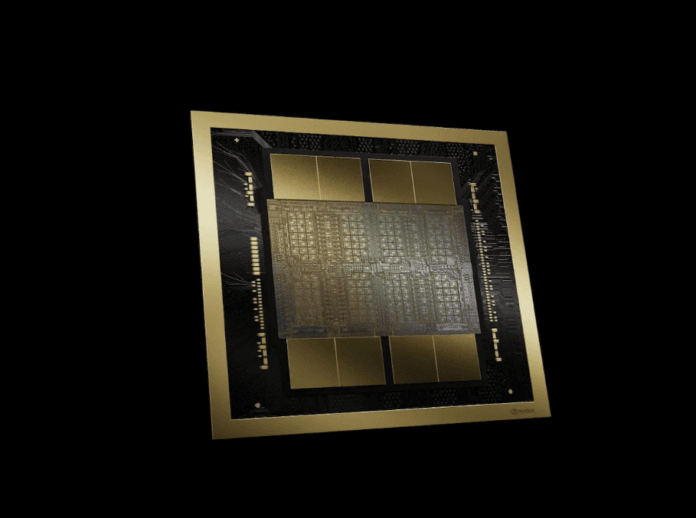
The mechanics work like this. Amazon would move thousands of Nvidia’s Grace Blackwell chips — already installed and running in more than a dozen of its data centers across five states, including Nevada and Virginia — into a newly created entity called a special-purpose vehicle, or SPV. That SPV would then own the chips outright, raising the money to effectively buy them from outside investors by issuing debt.
Amazon would turn around and lease the same chips back from the SPV to keep using them in its cloud business, AWS, paying rent instead of having bought the hardware outright on its own books. Amazon is reportedly offering investors up to a 10% equity stake in the vehicle, while keeping no ownership stake in it itself.
Why would a company with Amazon’s balance sheet bother with something this convoluted? Because Amazon’s AI spending has become genuinely enormous — the company now expects roughly $220 billion in capital expenditures this year, mostly for AWS chips and data centers, $20 billion more than it had guided investors to expect earlier. Buying that much hardware outright means carrying it as a massive asset — and a massive depreciation expense — directly on Amazon’s financial statements. Moving it into a separate vehicle lets Amazon keep using the computing power it needs while technically keeping much of that spending off its own books, a more “asset-light” approach that can make the company’s core financials look healthier even as the actual spending continues.
Investors are reportedly comfortable with the arrangement partly because the SPV’s debt would likely earn an investment-grade rating riding on Amazon’s own strong AA credit rating — potentially opening the deal up to conservative buyers like insurance companies and pension funds who wouldn’t normally touch speculative tech financing.
There’s a specific risk baked into this deal that’s worth understanding, because it says something about AI hardware generally. The Grace Blackwell chips being financed here are advanced, but they’re not Nvidia’s latest — the company’s next-generation Vera Rubin chips are already on the way to replace them. That matters because the entire value of the SPV’s debt depends on these specific chips staying useful and valuable enough, for long enough, to justify what investors paid for them.
If AI companies and cloud customers start preferring the newer Vera Rubin generation faster than expected, the Grace Blackwell chips sitting in that vehicle could lose value more quickly than the financing structure assumes — leaving the SPV, and ultimately its investors, holding increasingly dated hardware.
This isn’t happening in isolation. Amazon’s reported plan sits inside a broader and increasingly visible pattern: AI infrastructure across the industry is being financed less through straightforward corporate spending and more through debt, leasing deals, special-purpose vehicles, and supplier-backed credit arrangements. Cloud company CoreWeave has used similar GPU-backed financing to fund its own expansion, and Nvidia itself has offered to backstop up to $125 billion in financing across a wider network of AI infrastructure deals — effectively helping guarantee that the companies buying its chips can keep buying more of them. T
aken together, these arrangements raise a question that goes beyond any single company’s balance sheet: when AI’s physical infrastructure is this heavily wrapped in leases, vehicles, and supplier guarantees, how much of the real financial risk has actually left the biggest tech companies’ books — and how much has simply become harder to see.