

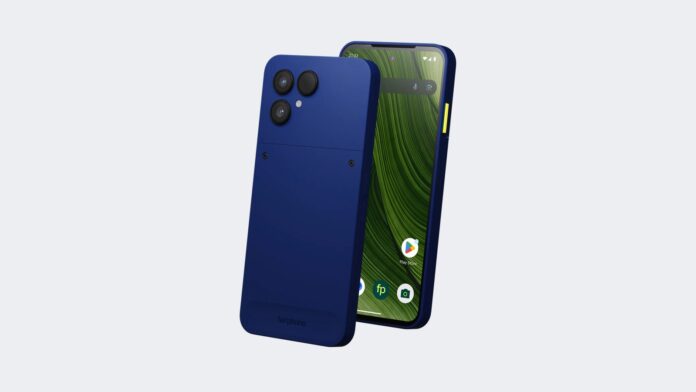

The Fairphone 6 Plus is the first phone the Dutch company has sold officially in the United States, and its arrival tests whether repairability can sell in the world’s most competitive smartphone market. Since August 18, Americans can buy the phone unlocked for $649 from Fairphone’s website and Amazon, 9to5Google reported. Fairphone calls the model the Gen. 6+. The bet is that some buyers, and some businesses, will pay mid-range prices for a phone built to last longer than usual.
From niche import to direct sales
Until now, Americans could buy a Fairphone only through Murena, a partner that sells phones with a “de-Googled” version of Android, an operating system stripped of Google’s apps and services. The Fairphone 6 cost $899 through that route, New Atlas reported. The new model ships with standard Android 16 and Google services, works on the AT&T and T-Mobile networks, and costs $250 less. It has not been certified for Verizon, the largest US carrier, Engadget noted. In Europe the phone costs €649.
What buyers get
The phone uses Qualcomm’s Snapdragon 7s Gen 4, a mid-range processor, with 12GB of RAM, the most in any Fairphone so far and a notable choice while memory chips are in short supply, and 256GB of storage that can be expanded with a microSD card. It has a 6.31-inch 120Hz OLED screen, a 50-megapixel main camera with optical stabilisation, a 13-megapixel ultrawide camera and a removable 4,415mAh battery with 30W charging, New Atlas reported. It comes in cobalt blue, forest green or black.
The selling point is how long it is meant to last. Twelve components, including the battery, screen and cameras, can be replaced with a single Torx screwdriver, and official spare parts cost roughly $8 to $90. Fairphone offers a five-year warranty and promises software updates through 2032. Its predecessor, the Fairphone 6, earned a perfect 10 out of 10 repairability score from repair specialists iFixit, Engadget noted.
Sustainability as a business model
Fairphone says more than half of the phone’s materials by weight are fair or recycled, and that each device has a carbon footprint of about 30kg of CO2, the smallest of any Fairphone. It also calls the phone the only fully “e-waste neutral” smartphone on sale in the US, meaning it pays to collect and recycle as much electronic waste as it sells. These are company claims. The cobalt blue colour is a nod to the company’s work on cobalt, a battery metal often linked to child labour and unsafe mines in the Democratic Republic of Congo; Fairphone says the phone uses 14 minerals or materials certified by the Fair Cobalt Alliance and the Initiative for Responsible Mining Assurance.
Rules are moving in Fairphone’s direction, at least in Europe. Since June 2025, EU ecodesign rules have required phone makers to keep spare parts available for seven years after a model leaves the market, offer operating system upgrades for at least five years, and show a repairability grade on an energy label, Cullen International reported. Big brands now have to meet some of the standards Fairphone built its brand on.
Why it matters for business buyers
For companies that issue phones to staff, the cost of a device includes repairs, replacements and how long it stays secure. A phone with a cheap replaceable battery and seven years of updates can stay in service longer than a model that has to be replaced when its battery fades or its updates end. Companies with sustainability targets also need to report the emissions of the equipment they buy, which makes a lower-footprint phone easier to justify.
The trade-offs are real. A Snapdragon 7s Gen 4 is not a flagship chip, and rivals offer similar speed for less money, New Atlas noted. It may also struggle with the heavier on-device AI features that phone makers are now promoting, a shift we looked at separately. The lack of Verizon certification also matters for American companies whose fleets run on that network.
Our take
The US launch is a sensible step that removes the two biggest obstacles Fairphone had there: a high import price and unfamiliar software. At $649, the phone asks buyers to pay for longevity rather than performance, and that case is strongest for businesses that count the cost of a phone over five years, not one. It will stay a niche brand in the US, but it shows that repairability is becoming a mainstream selling point, especially as EU rules push larger rivals in the same direction.