

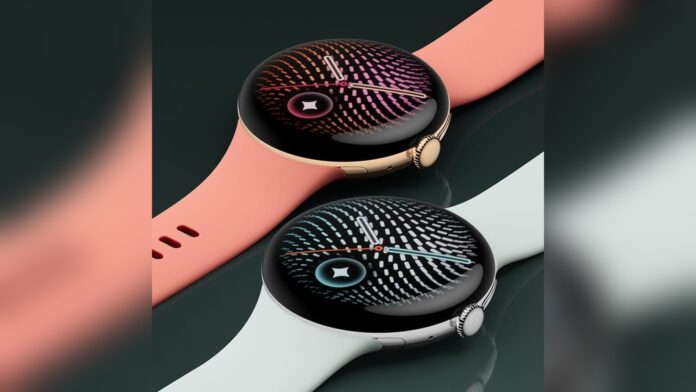

The Google Pixel Watch 5 costs $50 more than last year’s model and looks almost the same, yet it may be Google’s most important smartwatch so far. Announced on August 12 and on sale from August 20, it starts at $399 and moves the case for buying it from hardware to health software and on-device AI. For the wearables market, it shows two trends at once: rising component costs and a race to turn watches into health monitors.
What Google is selling
The 41mm model starts at $399 and the 45mm model at $429, both $50 more than their predecessors, Thurrott reported. Versions with LTE, which lets the watch connect to mobile networks without a phone, cost $499 and $529, according to Droid Life. A Stephen Curry Special Edition with its own band costs $579 and launches September 3.
Inside is Qualcomm’s Snapdragon W5 Gen 2 chip, which Thurrott says brings 50% more RAM and a 12% faster processor than before. At $399, the base model now costs the same as Apple’s entry-level Series 11, which removes the price advantage Google’s watch used to have against Apple. Google did not explain the increase. A likely factor is the cost of memory chips, which has risen as AI data centres absorb supply; Samsung expects the memory shortage to last until 2028.
Gemini on the wrist, even offline
The extra memory has a purpose. It lets Google’s Gemini assistant handle more requests on the watch itself, without an internet connection, Thurrott reported. “On-device” AI means the model runs on the watch’s own chip instead of a remote server, which helps with speed and privacy and keeps basic commands working when the phone is out of range. Gemini also now offers suggestions on its own and can complete several steps from a single tap, matching Google’s Pixel 11 phones, and Google improved “Raise to Talk” and one-handed gestures.
A watch that can call for help
The headline health feature is Breathing Emergency Detection. If the watch detects a severe and persistent drop in blood oxygen saturation (SpO2, the percentage of haemoglobin in the blood that is carrying oxygen), it places an emergency call. The feature launches first in the European Union, Thurrott reported, so US buyers will have to wait. It builds on Loss of Pulse Detection, which Google added to earlier Pixel Watches.
Google is also adding AI models that track long-term trends in blood pressure, sleep breathing quality and insulin resistance, a condition in which the body responds poorly to insulin and which often comes before type 2 diabetes. Google says these trends can reveal metabolic, respiratory and cardiovascular changes early. They are monthly summaries rather than on-demand readings, and they are not medical diagnoses. Google also added guided strength training workouts and says GPS route tracking is twice as accurate as before.
Why the health push matters for business
For Google, health features justify a higher price on hardware that barely changed. They also feed its subscription and AI businesses, which matter more to the company than watch margins. For the wider industry, the Pixel Watch 5 raises the stakes for Apple and Samsung, both of which are also adding health metrics. Apple usually unveils new watches in September, so the Pixel Watch 5 has only a few weeks on the market before its main rival responds. Features such as emergency calling face medical-device rules, which is why they often launch region by region as regulators approve them. That slows down sales of the most valuable features and gives companies with large regulatory teams an advantage over smaller rivals.
For employers and insurers, watches that estimate blood pressure and insulin resistance could become early-warning tools in wellness programmes. That also raises questions about consent and data use that will need answers before such programmes scale.
Our take
The Pixel Watch 5 is a software upgrade sold at a hardware premium. The $50 increase is hard to like, but offline Gemini and the new health features give it more substance than the near-identical design suggests. Breathing Emergency Detection is potentially life-saving, but US buyers cannot use it yet, and the blood pressure and insulin trends need independent validation before anyone relies on them. Owners of a Pixel Watch 3 or 4 lose little by waiting.