

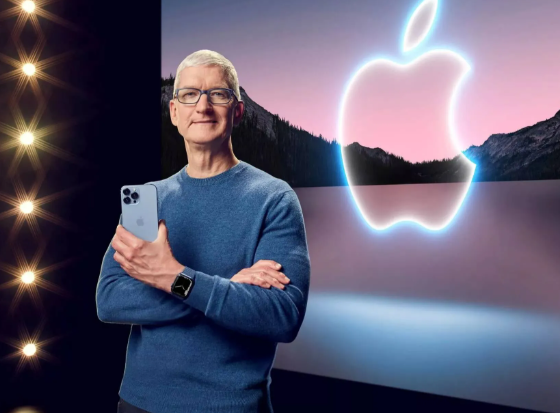

Apple Intelligence in China has finally been approved, Apple executive chairman Tim Cook said in an interview with the state-backed outlet The Paper, Reuters reported. A test version is due later this month, after years of regulatory delays.
Apple Intelligence is the name Apple gives to the AI features built into its iPhones, iPads and Macs, such as writing help, photo editing and smarter notifications. Most of it runs on the device itself rather than in the cloud.
What arrives first
Cook said the initial rollout will include live translation, writing tools and Clean Up, the photo feature that removes unwanted objects from pictures. The more advanced Siri AI features are not part of the first batch. Apple Intelligence launched in the United States in 2024 but has never been available on iPhones sold in mainland China.
Live translation converts speech or text from one language to another as a conversation happens, while writing tools can rewrite, proofread or summarise text in apps such as Mail and Notes. These are among the most practical parts of Apple Intelligence for everyday use, but they are also the kind of features that Chinese phone makers already offer.
A long road through Beijing’s rules
China requires AI models offered to the public to be registered with regulators, and foreign companies usually need a local partner. The approval did not come out of nowhere. In July, China’s cyberspace regulator said Apple Intelligence had been registered for use on iPhones.
On September 29, records from the Ministry of Industry and Information Technology were updated with registration numbers for the AI models inside several iPhones, including Apple’s new foldable iPhone Duo. For that phone the records list three models: Apple Intelligence and two from Alibaba, Tongyi Qianwen and Tongyi Wanxiang. Alibaba has worked with Apple on the China version of its AI.
Politics in the background
Cook’s interview followed a meeting with Commerce Minister Wang Wentao on October 15. According to the ministry, they discussed US-China trade, AI development and Apple’s business in the country. Wang told Cook that Beijing wants AI development to be “safe and controllable” and asked Apple to help steady trade ties between the two countries.
The reliance on Alibaba could become a political issue. The Pentagon added Alibaba to its list of Chinese military companies in June, a designation Alibaba is challenging. That could prove an awkward detail for Apple in Washington, where lawmakers have long scrutinised US companies’ partnerships with Chinese tech firms.
Why it matters for Apple
China is one of Apple’s biggest iPhone markets, and sales there have often swung on pricing and promotions. Apple has said before that the iPhone 16 performed better in markets where Apple Intelligence was available than in those where it was not. The missing features have been seen as a handicap against local Android rivals such as Huawei and Xiaomi, which already offer AI tools built on Chinese models.
A limited feature set may not close that gap on its own. Apple still has to show Chinese users why they need these tools, and without the new Siri the most eye-catching upgrades stay out of reach for now. The test version is a first step, and how quickly Apple can widen it will decide how much it helps iPhone demand.
Why it matters for businesses
For app developers and companies that sell to Chinese iPhone users, Apple Intelligence will gradually bring new system features, such as writing tools and translation, that apps can connect to. Businesses should also note the model behind the scenes: in China, Apple’s AI depends partly on Alibaba, so data handling and content rules will follow Chinese requirements. For investors, the rollout is one of the factors that could support iPhone sales in a highly competitive market.
Our take
Approval in China removes one of Apple’s biggest obstacles there, but the first version is modest. Translation and photo editing are useful, yet Chinese rivals already offer similar tools, and the new Siri is still missing. Apple has also had to accept a local partner, Alibaba, which brings political risk in the United States. The approval is good news for Apple, but it will not transform its position in China until the full feature set arrives.