

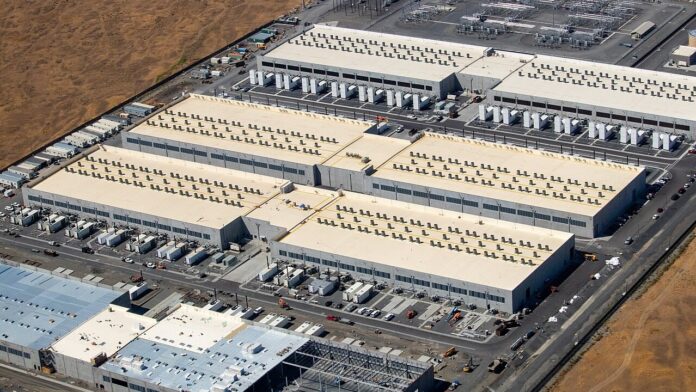

The AI boom has had its first big test at the ballot box, and it lost. In the U.S. midterm elections on November 3, voters approved bans or restrictions on data centers in dozens of towns and counties, and candidates who promised tougher rules on the industry won key races from Ohio to Texas. The data center ballot measures turned a debate about electricity bills, water and farmland into a direct challenge to the building plans of the world’s largest technology companies.
A near clean sweep for opponents
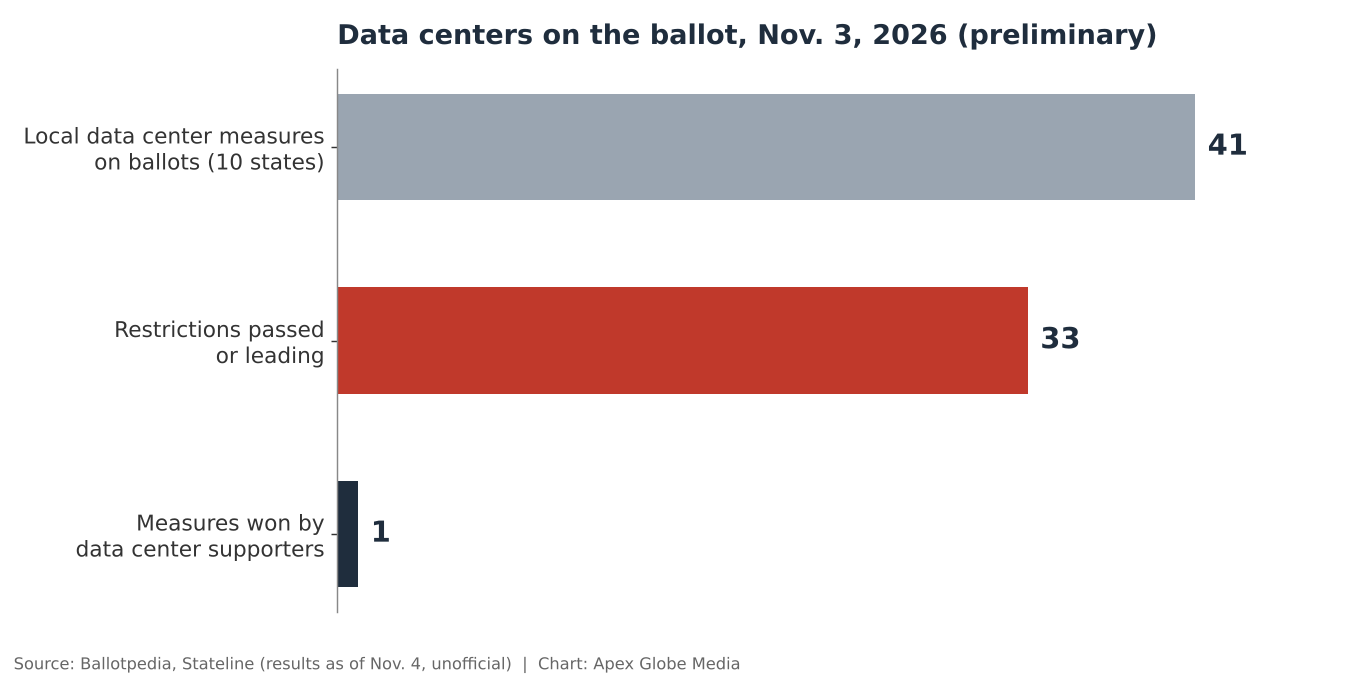
Ballotpedia counted 41 local measures on data center policy in 10 states, including 17 that would ban data centers outright. By late on election night, 33 measures to restrict data centers had passed or were leading, according to Stateline, and the Washington Post counted at least 29 jurisdictions that approved bans or restrictions. Only one measure, in North Dakota, went the way of data center supporters. Results are still unofficial in several places.
Ohio, one of the fastest-growing data center markets in the country, was the main battleground. It had 21 of the measures, in 18 municipalities, and at least 14 municipalities passed bans or restrictions, Fortune reported. In Trenton, a ban passed by about 80% to 20%, blocking a planned 18-building Amazon Web Services campus. Sunbury voters approved a charter amendment banning data centers of 25 megawatts or more, aimed at a possible Amazon hyperscale project. In Wilmington, about 80% of voters rejected rezoning that would have allowed data centers on rural land, and all five communities in central Ohio with measures on the ballot voted against data centers.
AI became a campaign issue
The anger was not limited to local referendums. In Ohio’s Senate race, Democrat Sherrod Brown, who campaigned on ending data center tax breaks and making companies pay for the power their campuses need, defeated Republican Jon Husted, who supported the tax breaks. In Texas, Democrat James Talarico beat Ken Paxton to win the state’s first Democratic Senate seat in more than 30 years, a race in which Elon Musk spent more than $47 million backing Paxton, according to the Financial Times. An NBC News exit poll cited by the FT found that 56% of voters said AI and data centers were a “crucial or a major factor” in their vote for Congress.
The industry spent heavily to change minds. A group called Build American AI, linked to the Leading the Future super PAC backed by prominent tech investors, spent at least $2.54 million on Ohio TV ads promising $40 billion in investment and more than 95,000 jobs, Fortune reported. Polls suggested an uphill fight: a Gallup survey in May found about 70% of Americans opposed data centers in their local area, and in Ohio 65% opposed tax breaks for them.
What it means for the AI build-out
The practical effect will be uneven. Some bans apply only to new projects, and a smaller AWS campus already under construction in Trenton is likely to go ahead. But the message to developers is clear, and it comes on top of existing delays: S&P counts more than 145 U.S. projects that have been delayed or stalled, and Ohio already has more than 125 local moratoriums. Bloomberg reports that new Democratic governors in states such as Texas, Georgia, Ohio and Pennsylvania could put half of all proposed AI data center projects under tighter scrutiny.
For AI companies, that adds another obstacle to a power crunch that has already pushed operators to turn old jet engines into power plants and to commit unprecedented sums to computing capacity. Big tech firms are spending hundreds of billions of dollars a year on AI infrastructure, a pace that has strained even their cash flows, and every blocked site pushes projects toward places with fewer restrictions, including other countries.
Our take
The tech industry has treated local opposition to data centers as a public relations problem. These results show it is a political one. Voters are not rejecting AI itself; they are rejecting a deal in which they bear higher power prices, water use, noise and lost farmland while the benefits go elsewhere. Companies that want to keep building in the U.S. will need to offer something better than TV ads: paying the full cost of new power lines and plants, binding commitments on water and noise, and a real share of local tax revenue. Communities have just shown that they can say no, and they will keep saying it until the terms change.