

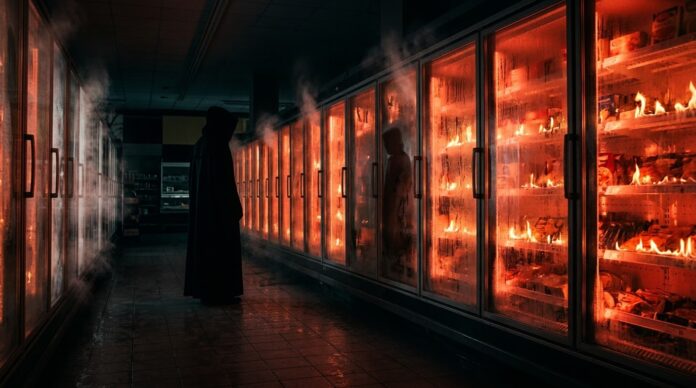

France has named the hackers who switched off thousands of supermarket fridges last month. On November 9, French intelligence and cyber agencies said a unit of Iran’s Islamic Revolutionary Guard Corps carried out the October cyberattacks that heated up commercial refrigerators and freezers across the country, and Foreign Minister Jean-Noël Barrot warned of “consequences for Iran”. It is one of the clearest cases yet of an Iran cyberattack causing physical damage in Europe.
A joint report by France’s spy and cyber agencies blamed Shahid Kaveh, which it described as a cyber offensive unit tied to the Guards, and named three alleged associates: Hamid Reza Lashgarian, Mahdi Lashgarian and Reza Salarvand, Reuters reported. Paris prosecutors have asked for international arrest warrants, Barrot summoned Iran’s ambassador, and France is pushing for new EU sanctions on Tehran.
700 sites and at least 15 fires
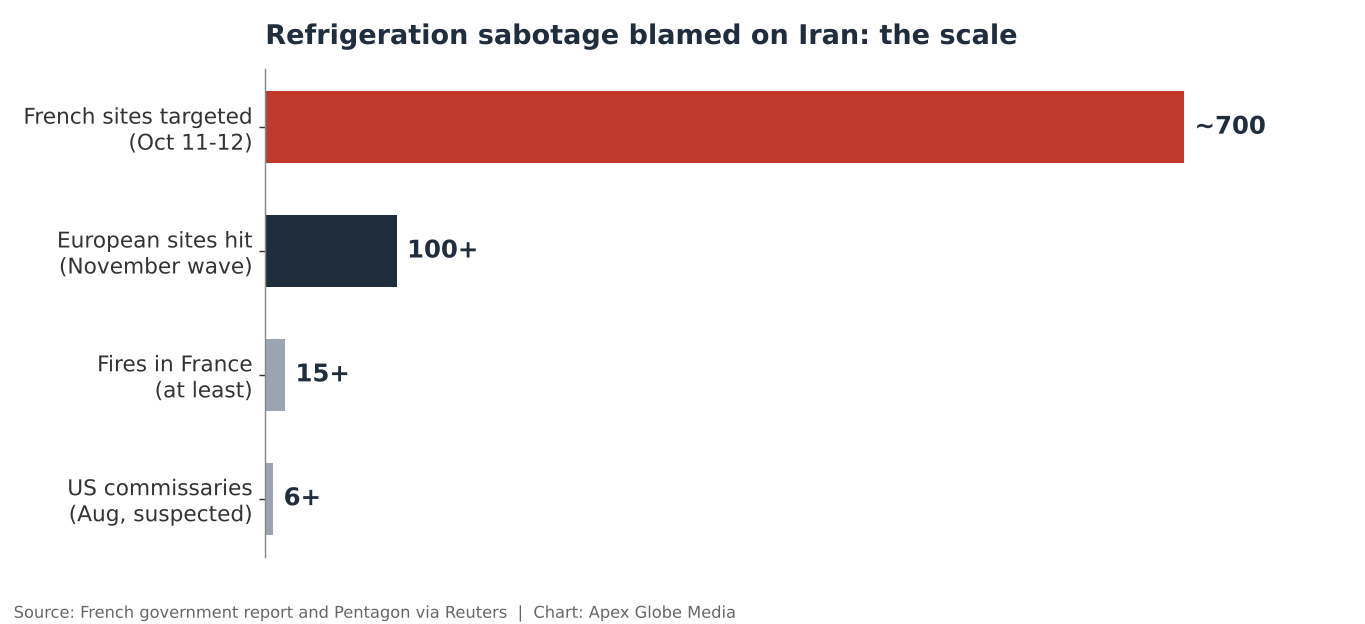
According to the report, the attackers targeted about 700 commercial sites across France on October 11 and 12. Most were supermarkets, but butcher shops, a slaughterhouse and food factories were also hit. The hackers took control of refrigeration controllers and raised temperatures. Some stores had to throw away entire stocks of fresh food, and at least 15 units caught fire. One supermarket owner estimated the total cost could reach “tens of millions of euros nationwide”.
Investigators pointed to shared attack infrastructure, an intrusion pattern that matches earlier Shahid Kaveh operations, and traces of Farsi. The hackers hid behind fake vigilante groups, including “CyberAveng3rs” and “Cyber Isnaad Front”. A group called CyberAv3ngers is known from 2023, when US agencies linked it to the Revolutionary Guards after it hacked industrial controllers at American water utilities. Microsoft had privately tied Iran to the French sabotage at least two weeks before Paris went public, according to people familiar with the matter. Microsoft declined to comment. Iran’s UN mission did not respond, and Tehran routinely denies such operations.
A second wave, and blood banks
The attacks did not stop in October. A second wave this month hit more than 100 establishments across Europe, including cold storage used by France’s national blood service, which had to move some blood to other units. We reported the details in our story on how hackers reached France’s blood supply. In the United States, refrigerators failed at at least six military commissaries in August. The Pentagon is treating that as a suspected cyberattack and considers Iran a suspect, though its investigation is still open.
Why fridges are an easy target
The weak point is not advanced hacking but old equipment. The manufacturer of some affected units said several were obsolete or ran outdated firmware. Commercial refrigeration is increasingly connected to the internet so that service companies can monitor and adjust it remotely. When those connections use default passwords or unpatched software, an attacker can change settings across hundreds of sites at once. Saher Naumaan of the security firm Proofpoint said the attack showed “how exposed these systems are” more than it showed Iran’s skill.
The same problem runs through much of Europe’s infrastructure. We have covered similar cases where AI tools speed up the discovery of old bugs, such as the decade-old OpenSSH flaw, and where routers and embedded devices go unpatched for years, as in the Broadcom router bug. Supermarket fridges are now part of that attack surface.
Our take
Naming the unit, the people and the evidence is a strong move by France, and it raises the cost for Iran. But warrants against officers in Tehran will never be served, and EU sanctions take months. The more useful lesson is at home. A state hacking unit did not need a secret weapon to cause fires and tens of millions of euros in losses; it needed old controllers left open to the internet. Until European regulators require the same basic security for connected cooling, heating and building systems that they already expect from banks, every supermarket and blood bank with a remote-managed freezer is a potential target.