

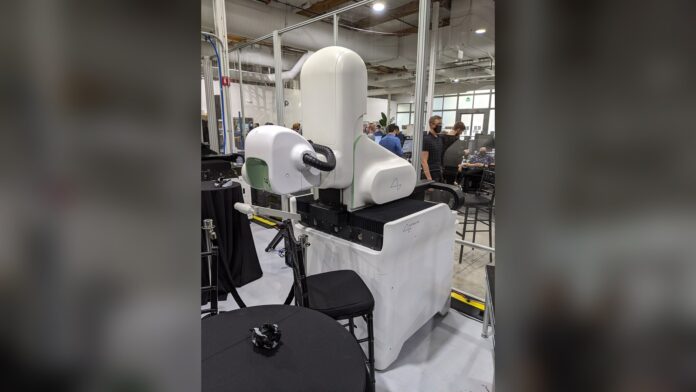

Neuralink has received approval from the US Food and Drug Administration to start the LINK Pivotal Study, a late-stage Neuralink brain implant trial in people with severe paralysis caused by ALS. The company announced the approval on November 25 and called it “the first pivotal trial for an implantable brain-computer interface (BCI) in the United States.” Enrolment is already open.
That sentence matters more than it may sound. For three years Neuralink has run small early studies that showed people could move a cursor or type with their thoughts. A pivotal trial is different. It is the study a company usually runs to gather the evidence it needs before asking the FDA to let it sell a medical device. In other words, Elon Musk’s brain chip company is now at the stage where it is trying to prove it deserves to be a product.
What the FDA approved, and what it did not
The approval lets Neuralink run the study. It does not allow the implant to be sold or used outside the trial, as The Next Web pointed out. The device is still investigational.
According to Neuralink, the study will “evaluate the safety and effectiveness of the Neuralink BCI system in individuals with severe paralysis due to amyotrophic lateral sclerosis (ALS).” It will look at whether participants can control digital devices through thought, “with a focus on functional outcomes that improve independence in daily life.” It will also keep tracking the long-term safety and reliability of the system across several clinical sites.
Neuralink has not said how many people it plans to enrol, how many sites will take part, or what exact results would count as success. Engadget noted that the company did not give other eligibility requirements beyond ALS. Those details usually appear in a public trial registry, and they will decide how convincing the final data can be.
How the trial works for a patient
The trial page lays out the steps. A person fills in an online form, speaks with the study team, and then goes through about two days of screening, including brain scans such as an MRI. A brain surgeon places the N1 implant in the skull while the patient is under anaesthesia, and Neuralink’s R1 robot inserts the implant’s fine, flexible threads into the brain.
The implant listens to the part of the brain that controls the hand. Participants learn to move a cursor by imagining moving their hand, and the system turns those imagined movements into mouse actions such as left, right and middle clicks. Most people go home about a day after surgery, according to Neuralink. After that come check-ups at around 10 and 45 days, and then at about 3, 6, 12 and 24 months, some in person and some from home.
Built on more than 30 implants
The pivotal study builds on Neuralink’s early feasibility studies in the United States, Canada and the United Kingdom. More than 30 participants have been implanted so far and have together used the device for “thousands of hours” of real-world use, the company said. It says participants have used their implants to study, create art, play video games and talk to their families.
The first participant, Noland Arbaugh, who was paralysed by a spinal cord injury, became the public face of the project in 2024. Neuralink’s first participant with ALS, Bradford Smith, was later able to communicate using brain signals alone. “Neuralink has given me freedom, hope, and faster communication,” Smith said at the time, as quoted by Engadget.
The road was not smooth. Neuralink’s first participant ran into major technical problems with his implant in 2024, The New York Times reported, though he said he had no regrets. In 2022 the company faced a federal investigation over its animal testing, Reuters reported. And before its first human study was approved in May 2023, the FDA had rejected Neuralink’s earlier application, citing concerns including overheating of the device and possible damage to brain tissue during removal, according to Reuters.
Why ALS first
ALS is a progressive disease that destroys the nerve cells controlling voluntary muscles. Over time, many patients lose the ability to move, speak and eventually breathe on their own, while their thinking usually stays intact. That makes them one of the groups with the most to gain from a device that turns intention straight into digital commands.
It is also a sensible regulatory choice. A pivotal trial has to show a clear benefit that outweighs the risk of brain surgery. For someone who can no longer type or speak, being able to send a message, browse the web or call for help on their own is a large and measurable gain. Neuralink’s earlier studies also included people with spinal cord injuries, and the TNW report notes that earlier studies took people after a brainstem stroke too. The pivotal study, for now, is about ALS only.
The race is getting crowded
Neuralink is the best-funded company in the field. It raised $650 million in 2025 at a $9 billion valuation, Bloomberg reported. But it is not alone. Paradromics implanted its device in its first patient in June, and China approved a commercial brain implant that same month and implanted its first patient in July, according to The Next Web. Beijing now wants to set standards for brain-computer interfaces and widen their use, the South China Morning Post reported this week.
We looked at the wider field earlier this year in our piece on the race to build brain-computer interfaces. The difference now is that the US race has a clear front runner in the regulatory process. Being first into a pivotal trial does not guarantee being first to market, but it gives Neuralink a head start on the data that the FDA will want to see.
Our take
This is the most important step Neuralink has taken since its first human implant, and it is a real achievement. Getting the FDA to agree on a pivotal trial design suggests the agency is satisfied with the safety data so far and with how the study will measure success. That is not a small thing for a company whose first attempt was turned down.
But we would keep the excitement in proportion. Thirty-odd implants are still a tiny number, and the company controls almost all of the information we have about how they are doing. Neuralink has not published how many people the pivotal study will enrol or what its main success measures are. The real test is not whether a few people can play video games with their minds. It is whether the implant keeps working for years, whether the threads stay in place, and whether patients can rely on it every day without a team of engineers nearby. If the LINK study answers those questions with open data, Neuralink will have earned the hype that has followed it since 2019. If not, the approval will turn out to be the start of a long and careful process, which is exactly how brain surgery should be treated.