

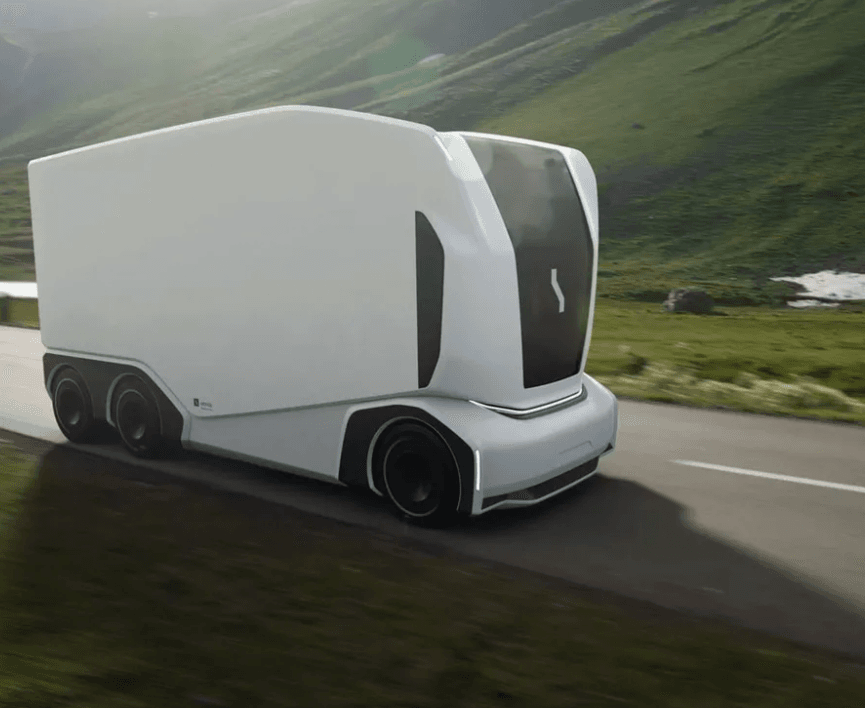

The expansion of autonomous freight operations reached a major historical milestone following a $200 million Series D funding round secured by middle-mile logistics leader Gatik. Led by the Qatar Investment Authority and Koch Disruptive Technologies, with participation from Millennium Management, ARK Invest, and Intact Private Capital, this capital injection accelerates the expansion of autonomous freight operations across North America, targeting a commercial fleet of over 100 fully driverless trucks by the end of 2026. Backed by more than $600 million in contracted revenue, 85,000 completed commercial driverless orders, and a 99 percent on-time delivery rate, the market is demonstrating that commercial vehicle autonomy is transitioning from experimental testing into high-volume daily supply chain infrastructure.
Evolution from Fixed Routes to Dynamic Logistics Networks
In its initial stages, the expansion of autonomous freight operations remained confined to short, simple shuttle runs. However, modern automated logistics architectures now manage complex regional transport corridors with high efficiency. In 2020, commercial deployments began with Canadian grocery retailer Loblaw across five predetermined, fixed routes of less than 10 miles in Toronto. By 2022, safety drivers were completely removed from these commercial delivery runs. Expanding on that partnership in late 2025, the companies committed to deploying 50 driverless trucks serving over 300 retail stores across the Greater Toronto Area.
Today, the expansion of autonomous freight operations relies heavily on dynamic route orchestration across highways and surface streets covering distances up to 400 miles. A multi-year agreement signed with PepsiCo in mid-2026 deployed 41 fully driverless box trucks moving Frito-Lay products between distribution centers and retail hubs across Dallas, Phoenix, and northwest Arkansas. This dynamic routing framework allows supply chain managers to add or remove delivery stops, respond quickly to sudden shifts in consumer demand, and adapt to warehouse operations without reconfiguring underlying transportation infrastructure.
Onboard Computing, Simulation Platforms, and Level 4 Autonomy
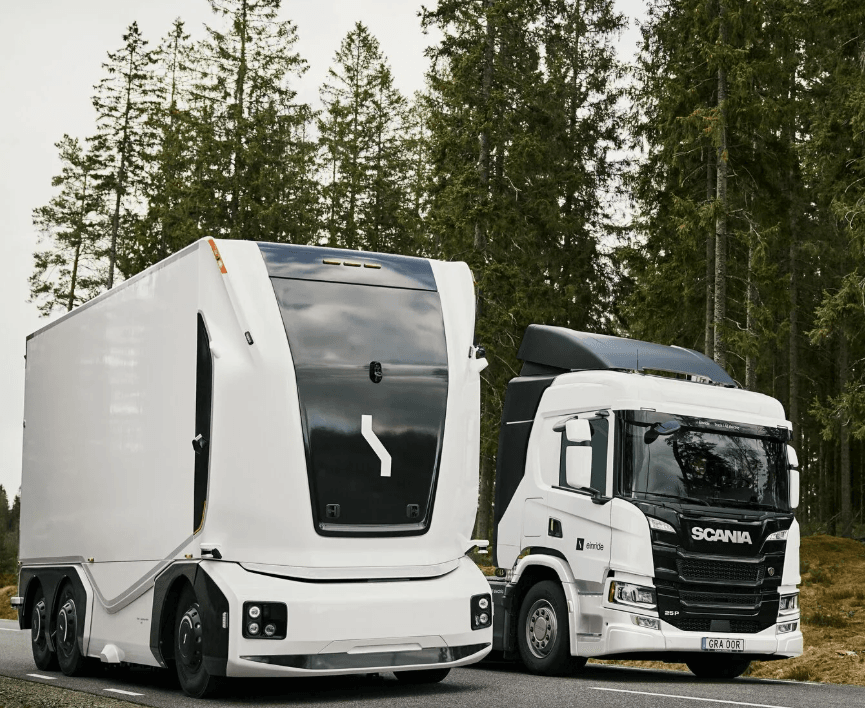
Operating medium-duty trucks safely without human safety observers onboard requires robust simulation software, advanced AI platforms, and redundant hardware computing architectures. To train and validate its proprietary driving system, Gatik utilizes its internally developed Arena simulation platform, which integrates Nvidia Cosmos world foundation models to generate realistic synthetic driving environments. Arena enables engineering teams to repeatedly test rare edge cases, high-risk scenarios, and adverse weather conditions virtually without exposing physical vehicles to road risks.
Onboard the trucks, Nvidia DRIVE AGX computing platforms process real-time sensor streams to execute Level 4 autonomous driving functions. Under Level 4 operating standards, the automated system performs all driving tasks within its designated Operational Design Domain without requiring human intervention. Third-generation commercial box trucks operate on round-the-clock schedules, navigating complex traffic, light rain, and snow conditions across highways and urban streets.
Commercial OEM Partnerships and Chassis Mass Production
To ensure long-term hardware reliability and fleet scalability, technology developers are partnering directly with established commercial vehicle manufacturers. Following a $30 million strategic investment from Isuzu Motors, joint engineering teams began developing a specialized Level 4 commercial truck chassis. This vehicle platform incorporates redundant braking, secondary steering control, and dual electrical circuits to ensure safe vehicle mitigation or continued operation in the event of an unexpected software or hardware defect.
Isuzu and its technology partners plan to initiate mass production of this dedicated autonomous chassis starting in 2027 to supply the North American middle-mile market. Combined with large-scale venture funding and long-term enterprise retailer agreements, this manufacturing framework establishes a solid foundation for commercial transport automation.
Ultimately, this Series D funding round reflects strong investor and enterprise confidence in driverless commercial transport. By pairing advanced simulation environments with automotive-grade AI hardware and OEM manufacturing commitments, the ongoing expansion of autonomous freight operations is positioning itself as a core driving force behind modern global supply chain management.