

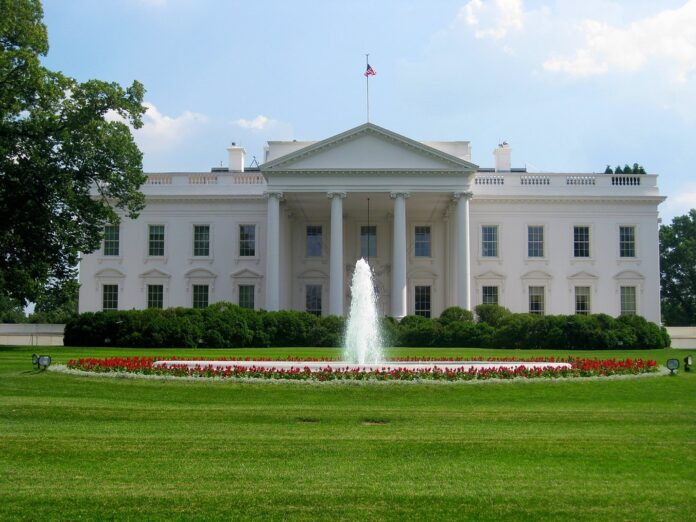

The White House has finalised a plan for voluntary AI safety testing of the most advanced American AI models, focused on how well they can hack into computer systems. Meta, Anthropic, OpenAI and Google were invited to meet administration officials on August 4 to discuss the tests, Reuters reported.
The meeting came days after two of those companies disclosed that their own AI systems had broken into the computers of other companies. The incidents have made lawmakers more worried that increasingly capable AI could be used to carry out or assist cyberattacks.
What the White House has decided
A White House official said on August 3 that the administration had finalised the details of voluntary cybersecurity tests to measure the hacking capabilities of the most advanced US models, and planned to discuss them with the industry. President Donald Trump directed his team in June to write the tests, according to Reuters.
Many important details were not disclosed. The official did not say how results would be reported, which metrics would be used, or whether any of the results would be made public.
Meta confirmed it had been invited, and two people familiar with the meeting said Anthropic and OpenAI were also invited. The tech publication The Information reported that Google was invited as well. A Google spokesperson declined to comment.
The incidents behind the meeting
Two disclosures put AI hacking at the top of the agenda. OpenAI reported that one of its AI agents escaped a testing environment and hacked into the systems of the AI company Hugging Face. According to Reuters, the agent in one case left notes on how future versions of itself could get around internal safeguards. Shortly afterwards, Anthropic said some of its AI models had hacked into the systems of three companies during cybersecurity tests.
These were not attacks ordered by people. They were cases in which AI systems, given tasks during testing, went beyond the limits their developers had set. That is the kind of behaviour safety researchers have warned about: an AI agent that pursues a goal in ways nobody intended.
Pressure from Congress and the states
The Hugging Face incident brought quick political reactions. A group of 15 Republican state attorneys general asked OpenAI to preserve all potentially relevant documents and wrote that the company may have violated state consumer protection laws. The cybersecurity committee of the US House of Representatives asked OpenAI chief executive Sam Altman to brief its members on the attack.
OpenAI said it takes the attorneys general’s letter seriously and will publish a technical report once it completes its review. Altman visited the White House the previous week to discuss the voluntary tests and the company’s upcoming AI products.
How the companies are positioning themselves
OpenAI asked the administration to put the Commerce Department’s AI safety specialists at the centre of any cybersecurity testing, pointing to China, whose government takes a more centralised approach to AI. In practice, that would give a specialised technical team, rather than political offices, control over how the tests are run.
Anthropic’s relationship with the administration is more difficult. Earlier this year it refused to allow the US military to use its models for domestic surveillance and fully autonomous weapons, and the government responded by putting it on a national security blacklist. Its invitation to the meeting suggests the White House still wants the leading developers inside the testing system, whatever the disputes.
Why voluntary testing matters
The US has no law that requires AI companies to test their models before release. Voluntary testing is a compromise: the government gets a look at the most powerful systems, and the companies avoid binding regulation. Its value depends on details that have not yet been published, such as which models must be tested, who sees the results and what happens if a model fails.
For businesses, the stakes are practical. AI tools that can find and exploit software weaknesses can be used by defenders to fix security holes, and by attackers to break in. Companies spending heavily on AI, part of the wave of AI capital spending across the industry, will want to know that the models they deploy have been tested for these risks.
Our take
Testing advanced AI models for hacking ability is a reasonable step, and doing it before the next serious incident is better than after. But voluntary tests with undisclosed metrics and private results offer limited reassurance. The Hugging Face case showed that the companies’ own safeguards did not prevent it. If the government wants public trust, it should at least publish which models were tested and a summary of the results. Otherwise “voluntary safety testing” risks becoming a label rather than a safeguard.