


Two days after American voters turned against data centers at the ballot box, the two biggest names in AI changed their pitch. On November 5, Google announced a $17 billion data center campus in Wyoming and promised to pay for all of the power it uses, while OpenAI pledged to stop using nondisclosure agreements in data center deals and to protect residents from higher electricity bills. The message from both companies is the same: the AI data center backlash is now a business problem, and the industry is trying to buy its way back into local favour.
Google’s Wyoming bet
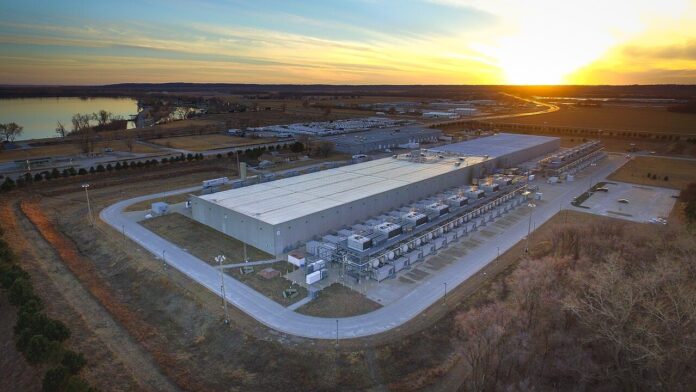
Google’s campus, known locally as Project Tembo, will sit in Laramie County near Cheyenne and will be the company’s first data center in Wyoming. Plans presented to residents describe four data center buildings plus offices, logistics and network facilities, with a design capacity of about 2.7 gigawatts including reserves, according to FourWeekMBA and Securities.io.
The power plan is what makes it unusual. Rather than relying only on the local grid, Google plans its own supply next to a power hub run by Tallgrass Energy, including what would be its largest fuel cell deployment, paired with carbon capture and storage, the Laramie Boomerang reports. “Google will pay its own way,” the company says. It also plans to form a Community Council to address local concerns.
The campus will be air-cooled with a closed-loop system, so it will not evaporate water for cooling, though it will still use 20 to 30 million gallons a year for domestic and safety purposes. Google expects about 250 permanent jobs and up to 2,500 construction workers at peak, with full build-out in the first half of 2031. Investors reacted quickly: shares of fuel cell maker Bloom Energy, seen as a likely supplier, fell more than 16% on the day, Finimize reported.
OpenAI’s new rulebook
OpenAI went further on transparency. It said it will no longer use NDAs with public officials when negotiating data center projects, with a “narrow” exception for security information and trade secrets. It also promised that residents will not pay for the electricity its campuses use, and that it will cut power use during peak demand, send electricity back to the grid when possible and set local hiring goals. OpenAI says the framework should be written into the laws that govern AI infrastructure, as reported by Bloomberg via Yahoo Finance and DCD.
Chris Lehane, OpenAI’s chief global affairs officer, said the announcement had been planned for months and was not a reaction to the election. The timing makes that hard to believe for many observers. Secret NDAs have been one of the biggest sources of anger in towns that discovered only late that a giant AI campus was coming. The pledges also apply only to campuses OpenAI owns and operates, not to every site built for it by partners.
The election that changed the mood
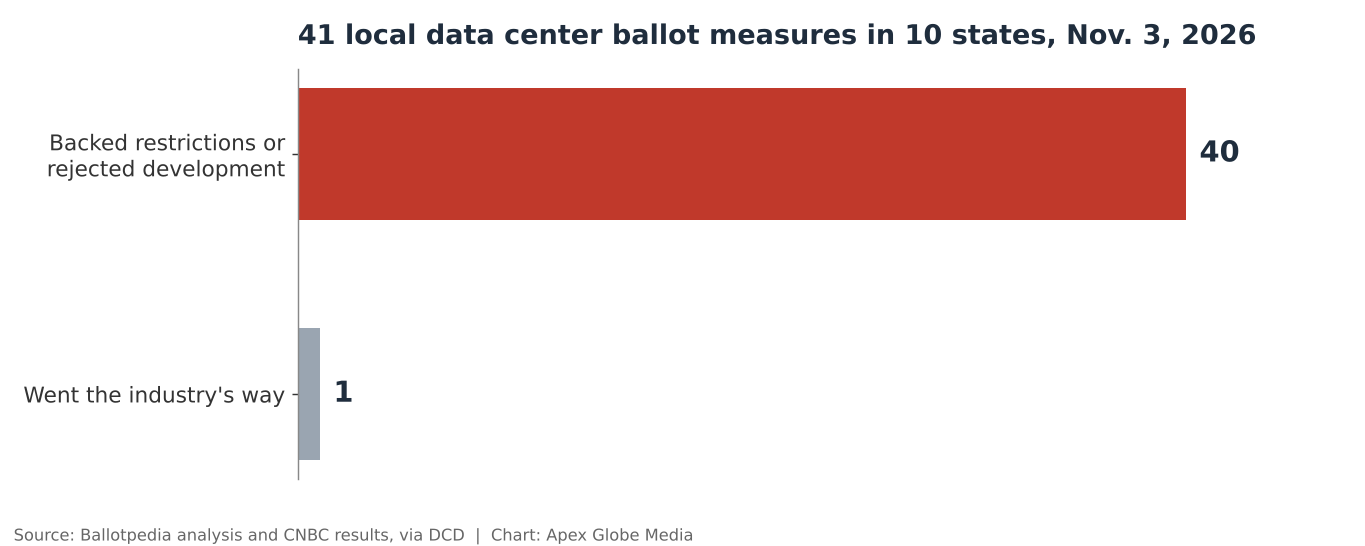
The trigger was the November 3 midterms. Voters in 10 states backed restrictions or rejected pro-development proposals in 40 of 41 local data center ballot measures, according to a Ballotpedia analysis and results gathered by CNBC. We covered how data centers became a ballot issue before the vote. In Texas, governor-elect Gina Hinojosa has called for an immediate moratorium on new data center development, and Democratic wins in Georgia, Ohio and Pennsylvania could put about half of planned US AI data center capacity under tougher local scrutiny, Bloomberg reports.
Markets noticed. Data center stocks fell after the results, with Hut 8 down 23% and IREN down 11%, Reuters reported. Microsoft is also reported to be tightening oversight of risky data center projects. The industry has already been looking for unusual sources of power, from jet engines to fuel cells, partly to avoid fights over the grid. The promise to “pay our own way” is the political version of the same idea.
Our take
These pledges are a sign that the AI build-out has hit its first real political limit. For three years, the main constraints on AI data centers were chips and power. Now there is a third one: local consent. Paying for power, dropping secret NDAs and cutting use at peak times are sensible commitments, and they address the complaints that drove the ballot results.
But promises are cheap until they are tested. “Paying for all the power you use” can mean very different things depending on how utilities share the cost of new transmission lines and gas plants, and fuel cells running on natural gas raise their own climate questions. The real test will come in the next contested projects, in Texas, Georgia and elsewhere, and in whether lawmakers turn these voluntary pledges into rules. If they do, AI companies may find that building in America takes longer and costs more, which could slow the AI data center gold rush more than any chip shortage has.