

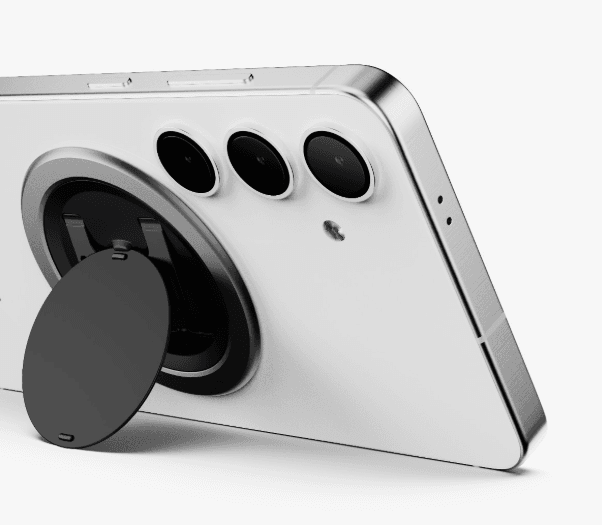

The OhSnap magnetic phone grip with a built-in stand is a small product that says a lot about a big shift in the smartphone accessory business. The Grip Stand, sold for $49.99 at Target, is an aluminium finger grip and kickstand about 3mm thick that snaps onto the back of a phone with magnets. Products like it exist because phone makers have finally agreed on a common magnetic standard, and accessory companies are racing to sell into it.
What the product is
The Grip Stand attaches without adhesive to phones that support Apple’s MagSafe magnets, or to other phones through an included magnetic adapter. It folds out into a finger loop for one-handed use and a stand that holds the phone upright, and because it is magnetic on both sides it can also stick to a fridge door, a gym rack or a car mount, Target’s listing and a G Style Magazine review from April note. The reviewer found the stand works best on flat, hard surfaces and praised the slim profile, which slides into a pocket without snagging. OhSnap also sells the Snap Pack, a thin magnetic battery that stacks under the grip.
The trade-offs are typical of the category. The grip usually has to come off for wireless charging, and some buyers on retailer sites report that the magnets are not strong enough for the largest, heaviest phones or that the hinge wears over time. Those are individual user reports, not test results, but they show the engineering challenge: the thinner the accessory, the less room for strong magnets and sturdy hinges.
Why magnetic accessories are booming
Apple introduced MagSafe, a ring of magnets in the back of the iPhone that aligns chargers and accessories, with the iPhone 12 in 2020. For years, Android phones had nothing comparable, and accessory makers had to rely on stick-on metal rings. That changed with Qi2, a wireless charging standard from the Wireless Power Consortium that adopts Apple’s magnetic design so that one accessory can work across brands.
The turning point for Android came in August 2025, when Google’s Pixel 10 series became the first major Android line with Qi2 magnets built in, branded Pixelsnap, Android Central reported. Pixelsnap works with existing MagSafe accessories from Apple and third parties. Tech Advisor argued that other Android makers such as Xiaomi, Oppo and Honor would come under pressure to follow.
The business case for accessory makers
A shared magnetic standard changes the economics of accessories. Instead of designing separate products for each phone shape, a company can sell one grip, wallet, stand or battery to owners of iPhones and a growing number of Android phones. That widens the market and lets small brands compete with large ones through design rather than distribution deals with phone makers.
It also makes accessories more modular. Because they snap on and off, buyers can own several (a grip, a wallet, a battery) and switch between them, which encourages repeat purchases. Prices reflect that shift: a $50 grip costs several times more than a basic adhesive phone grip, and brands justify the premium with metal construction and thinner designs.
The risk is crowding. Magnetic accessories are easy to copy, and online marketplaces are full of cheap alternatives. Brands such as OhSnap have to compete on build quality, reliability and design, the same pressures facing makers of other everyday devices. As phones keep getting more capable and more expensive, accessories that protect and extend them become an easier sell.
What it means for retailers and businesses
For retailers, magnetic accessories are attractive add-ons at checkout, that typically carry higher margins than phones themselves. For companies that issue phones to employees, the standard offers practical options such as magnetic car mounts and desk stands that work across mixed iPhone and Android fleets. And for phone makers, the accessory ecosystem is a selling point in its own right, one reason Google chose to build magnets into the Pixel rather than leave the job to case makers.
Our take
The OhSnap Grip Stand is a well-made answer to a simple need, and its slim aluminium design sets it apart from cheaper plastic grips. The bigger story is the standard it plugs into: magnetic accessories are becoming a cross-brand market rather than an iPhone niche. Buyers with heavy phones should check user reviews on magnet strength before paying a premium, but the category itself is likely to keep growing as more Android phones ship with magnets built in.