

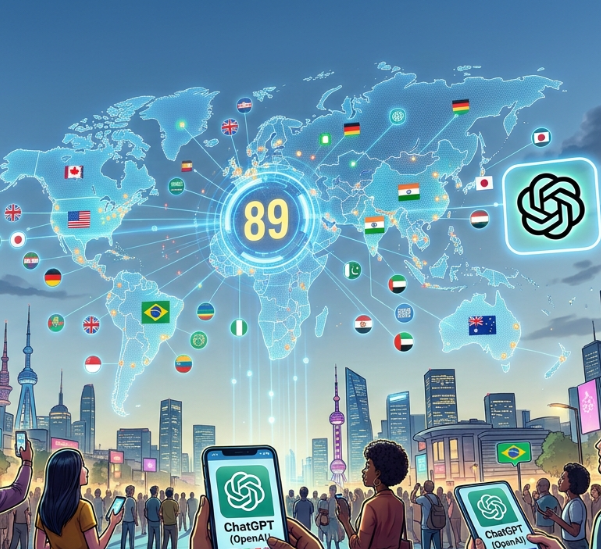

ChatGPT ads are now sold in 89 countries after OpenAI added 26 markets on Wednesday, and the company says more than 100,000 advertisers have run campaigns since ads first appeared in the chatbot just over eight months ago. The move, Reuters reported, is part of a push to build advertising revenue ahead of a possible stock market listing.
Where the ads are going
The new batch includes 14 more Latin American countries, among them Argentina, Chile, Colombia and Peru, following earlier launches in Mexico and Brazil. The rest are spread across Europe, the Middle East, Africa and Asia, with OpenAI naming Nigeria, South Africa, Serbia, Ukraine, Cambodia, Bangladesh and Pakistan. In total, the announcement names only 11 of the 26 new countries, PPC Land noted in a detailed read of OpenAI’s post.
Businesses in these markets can buy ads through technology partners or set up campaigns themselves in Ads Manager, OpenAI’s self-service tool. The post does not say which partners are involved, which currencies advertisers will be billed in, or whether ads can be written in local languages such as Bengali, Urdu or Khmer.
The rollout has been fast. According to PPC Land’s count, nine markets were live in mid-August, 31 European markets were added in late August, India followed days later, and a group of Southeast Asian countries plus Taiwan arrived on September 23. OpenAI’s help pages listed 63 countries before Wednesday, so this step adds about 40 percent more markets at once.
Who actually sees them
Ads appear only on the Free plan and on Go, ChatGPT’s cheapest paid tier. Plus, Pro and Enterprise subscribers stay ad-free. OpenAI says ads are clearly labelled and kept separate from ChatGPT’s answers, and that advertising does not influence what the chatbot says.
The formats keep changing. In September OpenAI introduced AI-powered tools for advertisers and began testing business-sponsored agents with selected U.S. advertisers, Reuters reported. On October 5 the company said it would test visual ads shown while ChatGPT generates an image, kept apart from the image itself, WinBuzzer reported. OpenAI says the next phase will bring more ad formats, campaign goals, buying options and measurement tools.
What the 100,000 figure means
The headline number needs care. OpenAI defines it as advertisers that “have run campaigns on ChatGPT” since U.S. ads launched in February. That is a cumulative count: it includes anyone who ran a single test campaign and stopped, PPC Land pointed out. OpenAI gives no figure for how many advertisers are active now or how much they spend.
Third-party trackers suggest steady growth. Ad intelligence firm Adthena counted 7,306 unique advertisers in the week of July 9 and 12,075 in the week of August 31, according to PPC Land. Those are weekly snapshots measured differently from OpenAI’s total, so the two numbers should not be compared directly.
The money behind the rollout
OpenAI said in August that its ads business had reached an annualised revenue run rate of $1 billion, meaning its current revenue pace would add up to that over a full year. The company has said it will not go public in 2026, as we reported in September, but a growing ad business still strengthens its case for a later listing.
The audience is large. OpenAI says more than 1.2 billion people use ChatGPT every week. Spread across that whole base, $1 billion comes to well under a dollar per weekly user per year. That is a rough calculation, since only Free and Go users see ads, but it shows how much room the company sees to grow. For comparison, Google and Meta built their businesses on free products paid for by advertisers, and ChatGPT is now following a similar path, with ads sitting alongside subscriptions, enterprise contracts and paid access for developers.
What it means for advertisers
For brands in the new markets, ChatGPT offers something search ads cannot: placement inside a conversation where a person is comparing options or asking for advice. Campaigns are organised around “context hints” that describe relevant conversation topics rather than lists of keywords, PPC Land reported. The trade-off is limited data. With no public figures on prices, results or active advertisers by country, early buyers in Argentina or Nigeria will be testing a channel with little benchmark to go on.
Our take
Ads were always the obvious way to pay for a chatbot used by more than a billion people, and OpenAI is rolling them out at the pace of a company that needs the revenue. The harder question is trust. People ask chatbots for recommendations, which is exactly where advertisers want to appear, and OpenAI’s promise that ads do not shape answers will be tested as formats become more “native.” Advertisers should also treat the 100,000 figure as a sign of interest rather than proof of results until OpenAI shares active-advertiser and performance data.