

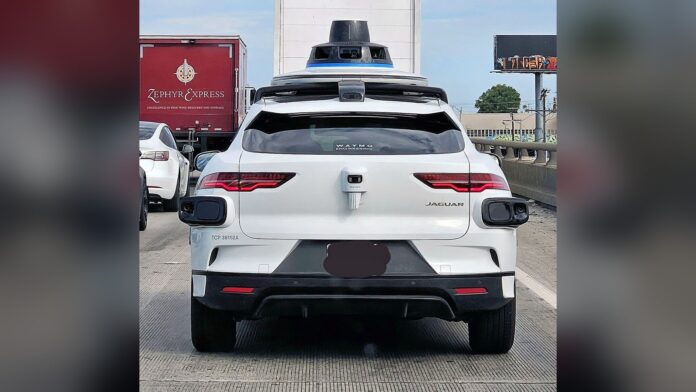

Waymo’s robotaxis are off the highways, and not only in California. The California Department of Motor Vehicles has ordered a statewide Waymo freeway ban, calling the company’s driverless freeway operations “an imminent hazard to public safety,” and Waymo responded by halting highway driving in every market where it carries passengers, WIRED reports. The DMV says the order took effect on November 11. It only became public on November 17.
Waymo’s cars keep running on surface streets in the 15 metro areas it serves, including parts of Los Angeles, San Diego and the San Francisco Bay Area. What riders lose is the fast part of many trips: the freeway legs that made robotaxis competitive with Uber on longer rides.
Two incidents, one pattern
DMV spokesperson Jonathan Groveman said in a statement that the ban followed two recent incidents. In the first, three Waymo vehicles drove into an active construction closure on Route 101 on the San Francisco Peninsula, near Burlingame according to The Verge. In the second, a Waymo interfered with California Highway Patrol cars on Interstate 280 in San Francisco while officers were running a “traffic break,” a rolling slowdown that police use to hold traffic back while crews clear debris from a crash.
The second incident went viral. The clip shows two patrol cars spread across the lanes behind a construction vehicle, lights on, while a Waymo moves quickly up the far left lane. One officer accelerates and swerves in front of it, and the robotaxi swerves and slows down. Electrek notes that at least one outlet suggested the original post had been sped up, so the video may make the car look faster than it was.
The video alone would not explain the DMV’s language. What seems to have moved the regulator is repetition. According to Electrek, the DMV cited multiple cases of Waymo vehicles entering construction zones, said earlier incidents had been noted and corrective actions put in place, and said the incidents kept happening anyway. Waymo says none of the incidents caused a collision or an injury.
Why Waymo stopped everywhere
California’s order covers only California freeways. Waymo could have kept highway rides going in Phoenix or other markets, and chose not to. The company told WIRED it is “working with the California DMV and other state officials diligently and responsibly to resume freeway operations,” and said it may keep testing on highways outside California with safety drivers behind the wheel.
That decision tells you something. Waymo runs one driving system in every city. If the software has trouble reading a freeway work zone in San Mateo County, there is no strong reason to think it reads one in Arizona much better. Pulling back nationwide is the cautious move, and it also avoids the risk of a similar clip appearing from another state while California is reviewing the company.
The ban stays in place until Waymo shows it has “taken effective corrective actions to address the deficiencies” behind the incidents, Groveman said. Nobody has said how long that will take.
Not the first warning about work zones
This is the second time Waymo has publicly limited its freeway service since it started carrying paying passengers on highways last year, WIRED reports. In June the company recalled its software after the National Highway Traffic Safety Administration found that the system failed to recognize highway construction zones. NHTSA cited several cases in April and May in which Waymo cars drove past ramp closure signs and into active lane closures. Those also ended without crashes or injuries.
There is a second open question with federal regulators. Last week NHTSA said it was examining whether an earlier Waymo recall had actually fixed the problem it targeted. That recall, from last December, followed incidents in which Waymo cars repeatedly drove past stopped school buses with their lights flashing or stop arms out.
Seen together, the cases share a theme. Waymo’s cars handle ordinary traffic well, and the company points to its record: Electrek cites Waymo’s own figures: 271 million miles driven and, by the company’s count, 841 injuries stopped. The trouble comes when the road stops following its normal rules: a lane closed by cones, a police car deliberately blocking traffic, a school bus with a stop arm out. These are situations where human drivers read intent from context, and where a robot that does the statistically normal thing does the wrong thing.
Why work zones are so hard for robots
Self-driving systems have struggled with construction zones for at least a decade, as WIRED points out. No two work zones look the same. Cones, barrels, arrow boards, flaggers, hand-written signs and temporary lane markings get combined differently each time, and sometimes the old lane paint still contradicts the new layout. People rarely think about this, because humans are good at it. For software, it is a long list of unusual cases, and freeway speeds leave little room to recover from a mistake, with road workers standing a few feet from moving traffic.
Police traffic breaks are a related problem. The officers are not stopping traffic with a signal or a gate. They are weaving across lanes to slow everyone down, and drivers are expected to understand the purpose and fall in behind. A robotaxi that sees an open lane on the left and takes it is following the road, not the officers.
What it means for the robotaxi race
The pause lands at an awkward moment for the industry. Waymo is the clear leader in driverless rides in the US, and rivals are moving fast: Amazon’s Zoox robotaxis became bookable through Uber last week, Tesla has started taking orders for its Cybercab (we looked at Tesla’s plan to build a robotaxi network with owners’ money), and carmakers such as Mercedes are bringing city-capable driver assistance to US roads, as we covered in our look at MB.Drive Assist Pro. Every one of them will be judged by the standard California has just set.
That standard is the real news here. The DMV did not act after a crash. It acted after near misses, and after concluding that fixes Waymo had already made were not holding. For any company planning to run driverless cars at highway speed, the bar is no longer “no one got hurt.” It is “show us the problem is actually gone.”
Our take
California made the right call, even though no one was injured. Three robotaxis rolling into the same active closure is not bad luck, it is a gap in the software, and the DMV is right that a repeated near miss next to road workers is exactly the kind of risk you act on before the crash, not after. Waymo also deserves some credit for pulling its freeway service everywhere instead of arguing the order only applies in one state. The company’s safety record on city streets is strong, but highways are where small misreadings turn deadly, and Waymo now has to prove, with data rather than statements, that its cars can tell when the normal rules of the road have been switched off.