

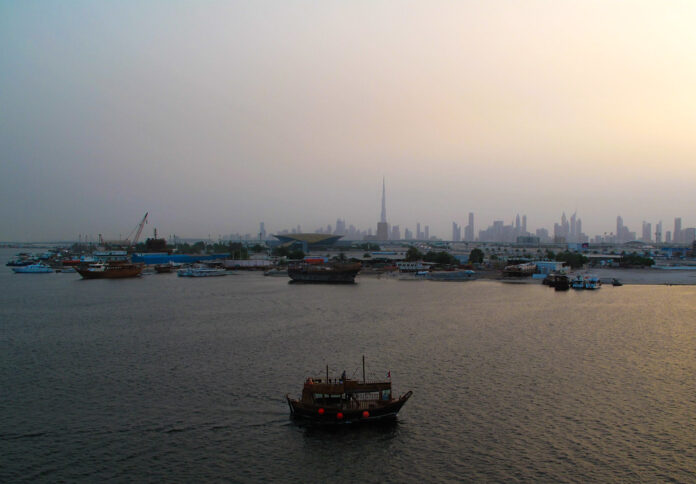

The first Dubai Environment Conference and Exhibition will take place on September 7 and 8 at the Grand Hyatt Dubai, and artificial intelligence will be one of its six main themes. The event, known as DECE 2026, is organised by the Dubai Environment and Climate Change Authority (DECCA) and will bring together policymakers, experts, businesses and academics to discuss environmental challenges, climate action and new technologies, Gulf News reported.
The conference is held under the patronage of Sheikh Ahmed bin Saeed Al Maktoum, chairman of the Dubai Supreme Council of Energy, with the theme “Protecting Our Environment, Preserving Our Future.”
Six themes
Discussions will centre on six areas:
- biodiversity;
- natural resources;
- food security;
- climate change;
- the circular economy, which aims to keep materials in use through repair, reuse and recycling instead of throwing them away;
- environmental artificial intelligence.
Climate sessions will look at reducing greenhouse gas emissions, adapting to climate change and making Dubai more resilient, as well as new financing models and the role of AI in climate action. Other sessions will cover air, soil and water quality, sustainable food supply chains, food loss and waste, recycling and the management of electronic waste. Alongside the talks, an exhibition will show environmental projects, technologies and solutions.
What “environmental AI” means here
The AI track is the most practical part of the programme. According to the organisers, it will explore the use of technology in managing water resources and monitoring changes along the coast, as well as satellite technology to track vegetation, analyse environmental events and collect data in real time.
These are areas where AI is already useful. Satellites produce far more images than people can review, and machine learning models can be trained to spot changes automatically, such as a shrinking mangrove forest, erosion along a beach or a new algae bloom. For a city like Dubai, with a long coastline, scarce fresh water and fast urban growth, faster monitoring can help authorities act before a problem becomes expensive.
Why Dubai is hosting it
“The conference and exhibition represent a new milestone in Dubai’s efforts to consolidate its position as a global centre for environmental innovation and leadership,” said Ahmed Mohammed bin Thani, director-general of DECCA.
The event supports several national and city policies: the UAE’s Net Zero by 2050 strategy, the National Green Agenda 2030 and the Dubai Urban Plan 2040. Organisers say they also want to strengthen cooperation between government, business and universities, encourage scientific research and build partnerships that speed up environmental action.
The UAE is also investing heavily in AI and data centers, which makes the theme a natural fit. The country wants to be both a hub for AI and a leader in sustainability, two goals that do not always point in the same direction.
The other side of AI and climate
AI can help monitor the environment, but it also consumes large amounts of energy. The International Energy Agency estimates that data centers used about 415 terawatt-hours of electricity in 2024, around 1.5% of global electricity consumption, and projects that this could more than double to about 945 terawatt-hours by 2030, driven mainly by AI, in its Energy and AI report.
That matters for hot, dry countries in particular. Data centers need cooling, and cooling in a desert climate uses more energy and, in some designs, more water. A serious discussion of environmental AI should include not only what AI can do for the environment, but how much the industry’s growth costs in power and water. The scale of that growth is clear from the wave of AI capital spending by the largest technology companies.
Why it matters for businesses
For companies working in the region, the conference is a signal of where regulation and public spending are heading. Water management, waste and recycling, food supply chains and environmental monitoring are all areas where the government is looking for partners and technology. Businesses that offer measurable environmental data, rather than broad sustainability claims, are likely to find the most interest.
Our take
Giving AI its own track at Dubai’s first environment conference is a sensible choice, because environmental monitoring is one of the areas where AI already delivers clear value. The test will be whether the event produces concrete projects with published results, not just announcements. It would also be more credible if the discussion covered the energy and water footprint of AI itself, since the UAE’s plans to grow as an AI hub will make that question harder to avoid.