

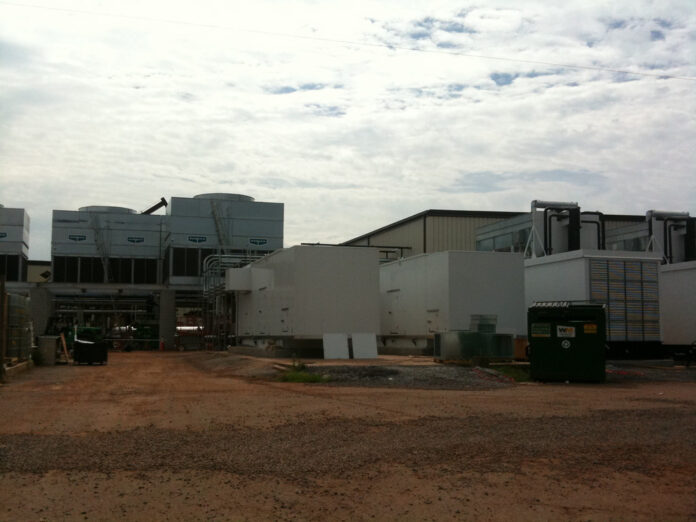

The AI data center backlash in the United States is now bipartisan, and the federal government is moving in the opposite direction. The Environmental Protection Agency plans to drop a federal requirement that states publicise and take public comments on air pollution permits for a range of facilities, including new data centers and the power plants that run them, The New York Times reported. Critics say residents could learn about a project only when construction begins.
“People need to have a chance to have a say before they see bulldozers,” said Keri Powell, a senior attorney at the Southern Environmental Law Center.
What the EPA is proposing
Under the Clean Air Act, states must offer a minimum 30-day public comment period before approving air permits for new industrial sources. The EPA proposed on July 1 to make that optional for what it calls “minor sources” of air pollution, a category that includes data centers, landfills, laundromats and steel mills, Gizmodo reported. States could still hold consultations, but the federal rule would no longer require them.
The EPA says the change is about speed and local control. Spokesperson Carolyn Holran said it would give state and local agencies “the discretion to determine whether, when, and for how long to provide opportunities for public participation,” and that it “does not alter emission standards or weaken environmental protections.” The agency has also proposed letting developers start building data centers before their permits are approved.
Why “minor source” is disputed
Environmental lawyers say the label understates the impact. Such facilities can emit up to 250 tons of hazardous pollutants a year, the Times reported. Data centers rely on large banks of diesel backup generators, and many tech companies are now building gas power plants to supply them, which release nitrogen oxides and fine particles linked to asthma and heart disease.
In northern Virginia’s “Data Center Alley,” Amazon holds enough minor-source permits for its backup generators to emit 4,200 tons of nitrogen oxides a year, roughly what a medium-size coal plant releases. Amazon said its generators account for less than 4% of regional nitrogen oxide emissions and do not run around the clock. “Being permitted for backup generation doesn’t mean those generators are running,” said Josh Weissman, Amazon’s director of data center delivery.
A backlash that crosses party lines
Polls show Democrats and Republicans share complaints about data centers: noise, air pollution, and pressure on electricity and water. Governors from both parties have asked for more public input, not less:
- Utah’s Republican governor, Spencer Cox, directed state agencies to provide “transparent, meaningful and thorough opportunities for public comment.”
- Texas Governor Greg Abbott, also a Republican, paused data center permit approvals until regulators can audit their effects.
- Pennsylvania’s Democratic governor, Josh Shapiro, required developers to prepare detailed community outreach plans.
Nearly 200 advocacy groups and the attorneys general of more than a dozen states have opposed the EPA proposal. President Donald Trump, by contrast, said last week that Americans opposing data centers are misinformed and that “smart communities” would welcome them, according to Gizmodo.
Why it matters for the AI industry
Data centers are the physical base of the AI boom, and the companies building them are competing for land, power and permits at the same time. Removing public comment could speed up approvals in the short term. But it could also make opposition angrier and push it into courts and state legislatures, where delays are longer and less predictable. The race for computing power is already shaping corporate strategy, as Anthropic’s plans for its own chips show.
For businesses that depend on cloud and AI services, local politics is becoming a factor in where capacity gets built and how much it costs. Developers that engage early with communities, publish emissions data and contribute to local power supply are more likely to avoid the delays that a hostile county board can impose.
Our take
The EPA’s argument for speed has some logic: the US is competing to build AI infrastructure, and permitting can be slow. But removing the public’s right to comment is the wrong fix for a backlash that is driven by people feeling ignored. When Republican and Democratic governors both ask for more input, cutting it at the federal level is likely to create more opposition, not less. Data center developers would be better served by transparency about noise, water and emissions than by permits granted quietly.