


Anthropic mathematician Levent Alpöge says he has proved the Riemann hypothesis, the most famous unsolved problem in mathematics, and that he did it working with the company’s AI model, Claude. In a short note posted on his website on November 20, he wrote: “I believe I have, working with Claude, discovered a proof of the Riemann Hypothesis.” He did not publish a paper that a person can read. He published only a formal proof written in Lean, a programming language whose software checks every step of a mathematical argument, and by the evening independent mathematicians who ran that code were saying it holds up.
If it survives the last checks, this is the first time one of the Clay Mathematics Institute’s seven Millennium Prize Problems has been solved with an AI system doing much of the work. The hypothesis has been open since Bernhard Riemann proposed it in 1859, and Clay has offered $1 million for a proof since 2000.
What the Riemann hypothesis says, in plain terms
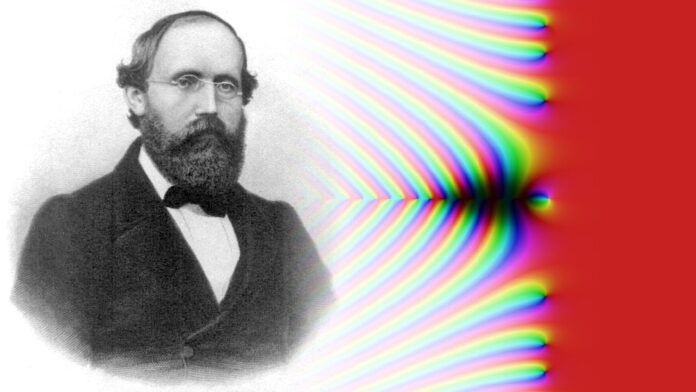
Prime numbers, the numbers divisible only by 1 and themselves, look scattered at random: 2, 3, 5, 7, 11, 13, then gaps that grow and shrink with no obvious rule. In 1859 Riemann showed that how primes are spread out is tied to a single function, now called the Riemann zeta function, and specifically to the points where that function equals zero. He guessed that all of the “interesting” zeros sit on one straight line in the complex plane, the line where the real part equals one half.
That guess is the Riemann hypothesis. If it is true, mathematicians get the tightest possible estimate of how many primes there are below any given number, with the error kept as small as it can be. Thousands of published results begin with “assuming the Riemann hypothesis”. A proof turns all of them from conditional statements into theorems at once. It also matters outside pure maths: the security of widely used encryption depends on how hard it is to work with large primes, and some fast primality tests are only proven to work if a stronger version of the hypothesis holds.
Alpöge says his method goes further than the classic statement. He claims it also settles the Generalized Riemann Hypothesis, and he expects to reach the Extended Riemann Hypothesis “with more time”. MIT mathematician Andrew Sutherland, whose team checked the code, notes on his verification page that “GRH” in the Lean files means the version for Dirichlet L-functions only.
Why there is no paper, only code
The unusual part is the format. According to the note, the full argument is so long that an AI-generated write-up passed 250,000 pages. Alpöge says he chose not to post it: “It being obviously inappropriate to attempt to post some massive unreadable travesty of ‘slop’, I decided to only present Lean.” The Lean project was released as 14 archive files on his site.
He is open about what that means. He writes that he is “presenting the world with a complete argument before having mastered a massive neighbourhood around its mathematics”, that he has “little mastery of automorphic forms on higher rank groups”, and that he “may have baked lots of strange suboptimal choices into the argument”. He expects much shorter proofs to follow and says he intends to “write it properly”.
On Claude’s role, he is just as direct. He says he steered the work towards the right setting, an idea built on Stepanov’s method, which proved the analogue of the Riemann hypothesis for curves over finite fields, and that the model then took over near the end: “this time Claude far outpaced me near the finish line. No, Claude flew, and danced, and sparkled near that finish line.” A timeline in the note, which he says Claude produced, dates the first key step to October 6 and the final steps to mid-November.
How mathematicians are checking it
A Lean proof can be checked by a computer instead of a referee, which is why verification moved far faster than usual. But a compiled file does not prove everything. As Kevin Buzzard of Imperial College London put it, quoted by Scientific American, the first question is “what is the statement of the theorem in the Lean code, and does this correspond to the actual theorem statement”. A proof of a subtly different statement, or code that quietly redefines a symbol, would be worthless.
Sutherland’s page, last updated at 22:05 UTC on November 20, lists what had been checked by then:
| Check | Result | What it means |
|---|---|---|
| Compile all 175,187 Lean modules | Passed, zero errors | The code builds as published |
| Axioms used by the five main theorems | Only the three standard ones | No hidden assumption was slipped in |
| Lean kernel replay of every module | 175,187 of 175,187 passed | Lean’s own checker re-verified each step |
| Two independent kernels (nanoda, con-leche) | Accepted the full proof | Separately written checkers agree, so a bug in Lean itself is unlikely to explain the result |
| Statement comparison against the “challenge” file | All five theorems matched (con-leche compare mode) | The proved statements are the ones claimed, using Mathlib’s own definition of the hypothesis |
| Official lake comparator run, Lean default and paranoid kernels on the export | Still running | The last formal checks |
The theorem being checked is called riemannHypothesis, and it is stated using the definition already in Mathlib, Lean’s shared library of mathematics, written long before this proof. That matters: it means Alpöge did not get to choose his own wording of the problem. The exported proof file alone is 7.7 GB compressed and unpacks to about 61 GB.
“The Lean proof has been compiled and independently rechecked by the Lean kernel with only the three standard axioms,” Sutherland told Scientific American. “Honestly the chance that anything is fishy here is approximately zero.” He also called it “an historic moment” in the magazine’s first report, adding: “There is much work to be done to understand the mathematical details of the proof.” Hector Pasten of the Pontifical Catholic University of Chile told the magazine that, if correct and understood, the proof would act as “something like a Rosetta Stone” linking branches of maths whose connections were only partial.
What is still not settled
Three things remain open. First, the final comparator run and the slowest kernel checks had not finished at the time of writing. Sutherland’s page also notes a technical caveat: the big build ran on cloud machines without a sandbox, and a full byte-for-byte comparison with a sandboxed build has not been made yet.
Second, a machine-checked proof is not the same as understanding. Nobody, including Alpöge by his own account, can yet explain the whole argument to other mathematicians. That is what the rest of the field will want before it treats the result as part of mathematics rather than a verified fact about a file.
Third, the prize. Clay’s rules require a solution to appear in a qualifying publication, wait two years, and win general acceptance in the community. A Lean archive posted on a personal website does not yet meet that bar, and Clay still lists the problem as unsolved.
There is also the timing. The note appeared a day after Anthropic’s record stock market debut, which we covered when the IPO was priced at $83. Alpöge addresses this himself: “The precise timing is horrible,” he writes, saying the proof came together “late Sunday night”, that he then messaged Anthropic CEO Dario Amodei about whether he could announce it, and that there was “a constraint to respect”. “There is an obvious cynical view, to do with the timing, but it is false,” he adds. No official Anthropic statement had been published by Friday evening.
How this happened so fast
The result did not come out of nowhere. In August, Anthropic reported that an unreleased research version of Claude had raised the proven share of zeta zeros on the critical line from 41.6% to 67.2%, while its attempt at the full hypothesis failed. OpenAI announced its own progress on prime-number problems this autumn. Alpöge’s note even praises OpenAI’s mathematical work for showing “great taste”. The race between the two companies has moved from coding benchmarks to the hardest problems mathematicians have.
Our take
The most important thing about this story is not that an AI helped, but that the proof could be checked in a day by people who did not write it. That is the one reason to take the claim seriously so quickly, and the reason the usual years of refereeing may shrink to weeks. At the same time, a proof nobody can yet read is a strange kind of victory for mathematics, and Alpöge seems to feel that too. Until the comparator run finishes and a human-readable version appears, the honest summary is this: the Riemann hypothesis has almost certainly been proved, and almost nobody yet knows why it is true.