


Apple has just reported the best September quarter in its history, and its new chief executive spent much of his first earnings call warning about the cost of memory chips. Apple Q4 earnings showed revenue of $114.5 billion, up 12% from a year earlier, driven by strong iPhone and Mac sales. But Apple forecast lower profit margins for the holiday quarter because of what John Ternus called “unprecedented” memory prices, and its shares fell about 3% in after-hours trading.
A record quarter
Revenue for the quarter that ended in late September beat analysts’ expectations of about $113.4 billion, and earnings per share of $2.10 beat the expected $1.99, TheWrap reported. Net income rose to $30.7 billion from $27.5 billion. For the full fiscal year Apple brought in a record $479 billion, according to 9to5Mac.
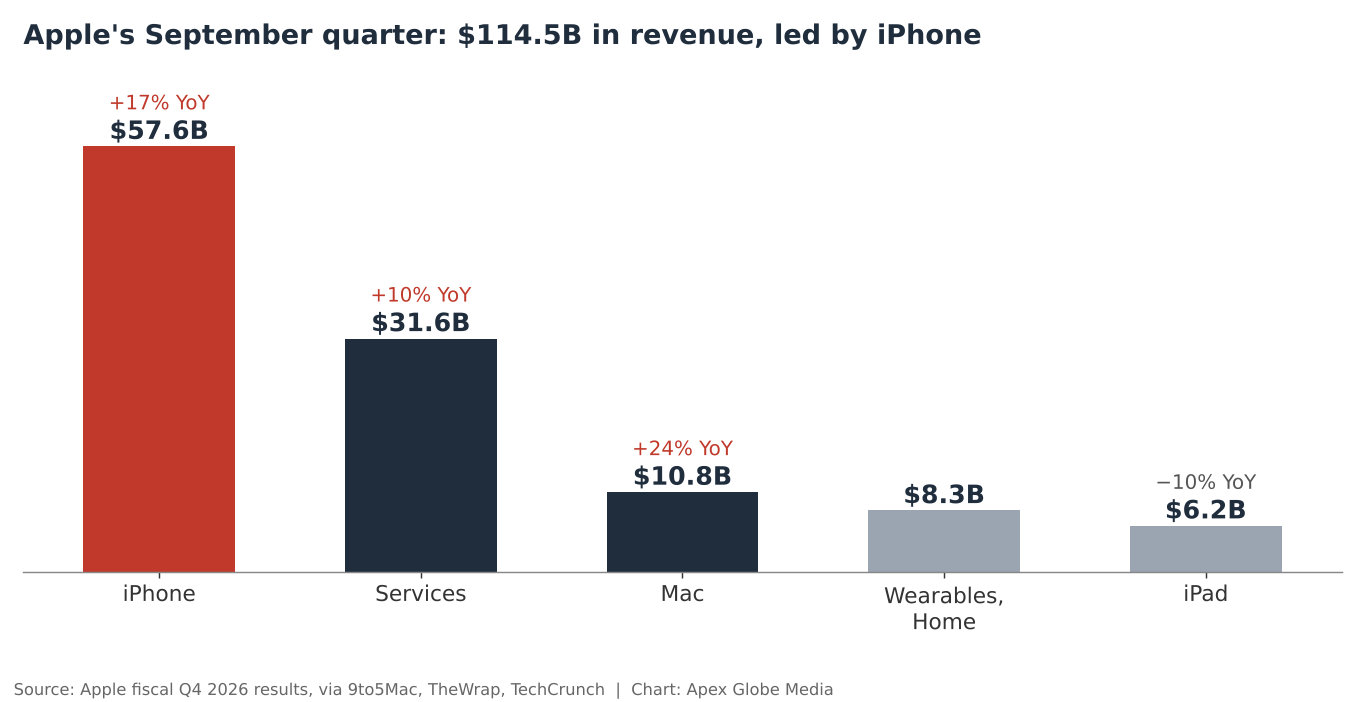
The iPhone did most of the work. Sales rose about 17% to $57.6 billion, a September-quarter record, helped by the new iPhone lineup and the folding iPhone Duo, which Ternus called “the most transformational iPhone since the original.” Mac revenue jumped 24% to $10.8 billion. Services, which include the App Store, iCloud, Apple Music and Apple TV, grew about 10% to an all-time high of $31.6 billion, and Apple said it now has more than 1.5 billion paid subscriptions and more than 2.5 billion active devices.
There were weak spots. iPad revenue fell 10% to $6.2 billion, below the $6.7 billion analysts expected, which Apple blamed on supply constraints. Greater China revenue rose 21% to $17.5 billion, but that was short of Wall Street’s forecast of about $18.9 billion.
The memory problem
The cloud over the results was the price of memory chips, which are being swallowed by AI data centers. “What we’re seeing with memory pricing right now is unprecedented,” Ternus told analysts, according to TechCrunch. Apple expects “even higher memory costs” in the December quarter and expects them to keep rising after that.
That is why Apple forecast a gross margin of 45% to 46% for the holiday quarter, down from 47.9% in the September quarter and below analysts’ estimates of about 47%. Apple has already raised prices on Macs and iPads in June and on iPhones in September, and chief operating officer Sabih Khan did not rule out more increases. The company has also been stockpiling: inventory rose 31% in one quarter to $14.5 billion, more than double the level a year earlier, and its manufacturing purchase commitments grew by $33 billion, a sign that Apple is locking in supplies of scarce parts before prices climb further.
Apple is not alone. Memory makers such as Samsung and SK Hynix are prioritising high-bandwidth memory for AI chips, leaving less capacity for the ordinary memory used in phones and laptops. We have already seen the effects in rising gadget prices and in Intel’s warning about PC demand. Apple’s huge buying power gives it better terms than most rivals, but even Apple cannot fully escape the squeeze.
Ternus’s first test
This was the first earnings call for Ternus, who took over from Tim Cook as chief executive. Bloomberg’s columnist described it as a “timid, scripted affair.” Ternus said he was “feeling great about the opportunities ahead for Apple” and that he was “delighted” with the services business. Apple expects revenue to grow 7% to 10% in the December quarter, above analysts’ forecast of about 6%, the Financial Times reported, but investors focused on the margin squeeze and the slowdown in services growth.
Our take
Apple’s numbers show that demand for its products is healthy: people are buying iPhones and Macs in record numbers despite higher prices. The problem is on the supply side, and it is a direct side effect of the AI boom. Every memory chip that goes into an AI server is one that does not go into a phone, and Apple is now paying the price, literally. The company can protect its margins by raising prices further, but that risks slowing sales in a holiday quarter when shoppers are already cautious. For Ternus, the challenge is clear: keep the iPhone Duo momentum going while managing component costs that Apple, for once, does not control.