

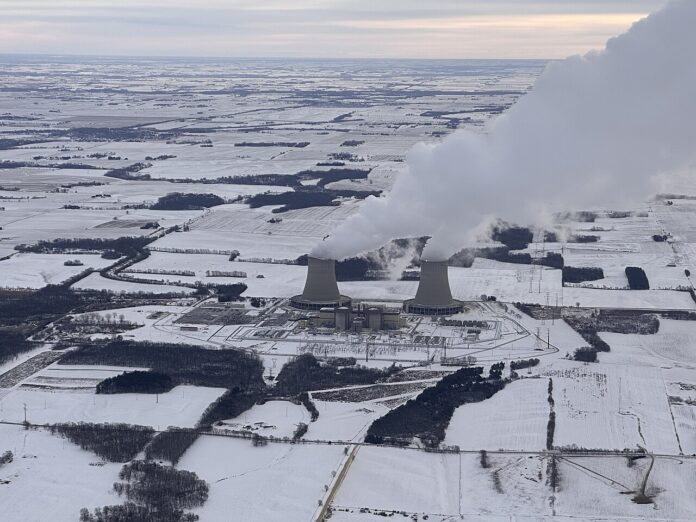

The fastest way to get more nuclear power for AI data centers turns out not to be a new reactor, but a bigger one. On October 27 the U.S. Department of Energy offered Constellation Energy a conditional loan of up to $5 billion to raise the output of nuclear plants it already runs in Illinois, Maryland and Pennsylvania. Most of that extra electricity is already promised to Google, Amazon and Meta.
What the government is offering
According to the Energy Department, its Office of Energy Dominance Financing will lend up to $5 billion for “uprates” and modernisation across Constellation’s fleet: Braidwood, Byron, Clinton, Dresden, LaSalle and Quad Cities in Illinois, Calvert Cliffs in Maryland and Limerick in Pennsylvania. The work is expected to add nearly 1.1 gigawatts, which the department says could power more than 930,000 homes, and to support more than 10,000 project jobs.
The commitment is not final. Constellation stresses that it depends on due diligence and other conditions, and that it is not a decision to build any particular project. Chief executive Joe Dominguez said the loan “can help us move faster and go further, putting more reliable power on the grid.”
Why uprates, and why now
An uprate raises a reactor’s licensed power output, usually by replacing turbines, steam generators, pumps and control systems, sometimes with changes to the fuel. It uses a site that already has a licence, cooling water and a grid connection, which avoids the decade-long timeline and the cost overruns that have plagued new nuclear plants in the United States. As Power Engineering put it, “the fastest path to more nuclear power may be getting more juice from the reactors already on the grid.”
That speed is what AI companies want. Data centers need large amounts of electricity around the clock, and grid connections for new power plants can take years. Constellation says 20-year agreements with Google and Amazon have already led it to invest more than $7 billion to add about 1,080 megawatts of nuclear capacity, and a separate Meta deal supports a 30-megawatt expansion at the Clinton plant. In early October, Google signed a 20-year deal for 890 megawatts of uprates at 11 Constellation reactors, with the first extra power expected in 2028.
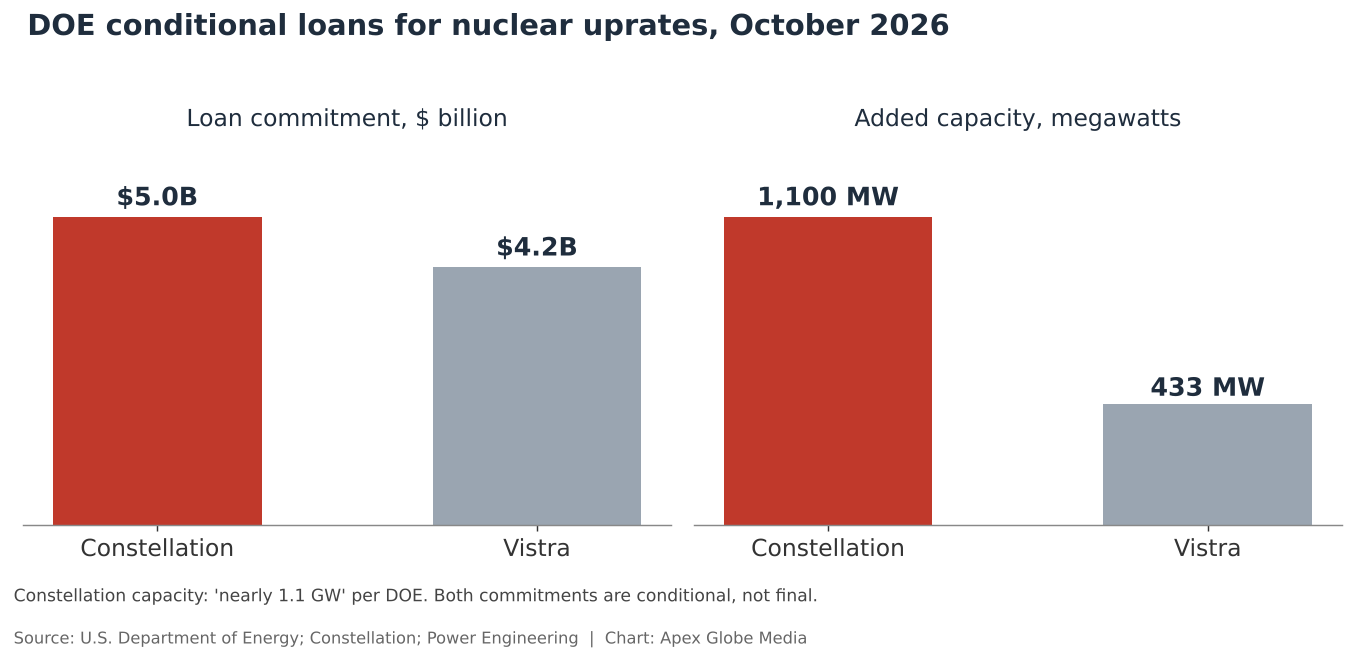
Constellation is not alone. Earlier in October the department offered Vistra up to $4.2 billion for uprates adding 433 megawatts at its Beaver Valley, Davis-Besse and Perry plants, power tied to agreements with Meta. The Energy Department says the loans serve a presidential goal of 5 gigawatts of uprates and restarts, and that 95% of that target has already been identified.
Who benefits
The government presents the loan as a way to provide “affordable, reliable power to American homes and businesses.” TechCrunch points out that most or all of the new output from seven of the eight plants is already committed to tech companies, and that Constellation would not confirm that the projects will lower household electricity rates. A federal loan lowers the cost of borrowing; whether that saving reaches consumers, Constellation, or the tech giants buying the power is not spelled out.
There is a reasonable counter-argument: every megawatt that data centers buy from an uprate is a megawatt they do not take from the existing grid, where their demand is already pushing up prices in regions such as PJM, the grid that covers much of the eastern U.S. The scale of the demand is clear from this week’s earnings, when Alphabet said it would spend $195 billion to $205 billion this year, mostly on data centers, and saw its free cash flow turn negative.
Our take
Uprates are one of the few genuinely quick and low-risk ways to add clean, round-the-clock power, and using federal credit to speed them up makes sense. But the arrangement deserves scrutiny. When public loans fund extra capacity that is already sold to the world’s richest companies, the public should see the loan terms and a clear account of what households gain. Otherwise, the “nuclear renaissance” risks looking like cheap government financing for Big Tech’s power bills.