

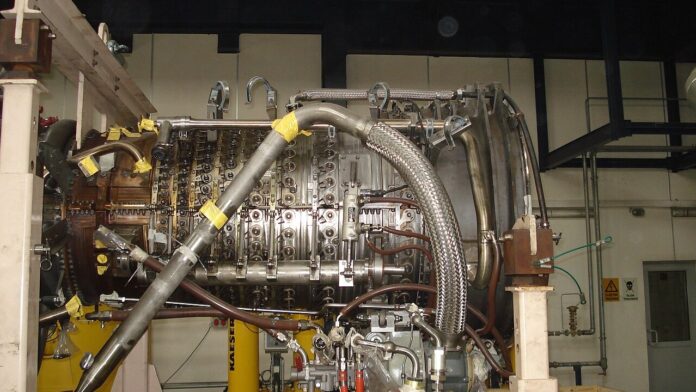

Retired airliner engines are getting a second life, not in the sky but next to AI data centers. Unable to wait years for a grid connection, U.S. data center operators and power developers are buying old jet engines and converting them into gas turbines that can generate electricity in about two years, The New York Times reported on November 3. Using jet engines for data centers is fast, but the converted machines are less efficient and dirtier than modern power plants, and that trade-off is already being fought out in permits and courtrooms.
From the boneyard to the server farm
The idea is simple. A jet engine is a gas turbine: it burns fuel to spin a shaft at high speed. Strip away the parts designed for flight, attach a generator, and the same core can produce electricity on the ground. Such “aeroderivative” turbines have been used for decades for backup and peak power, but AI has turned them into a boom business.
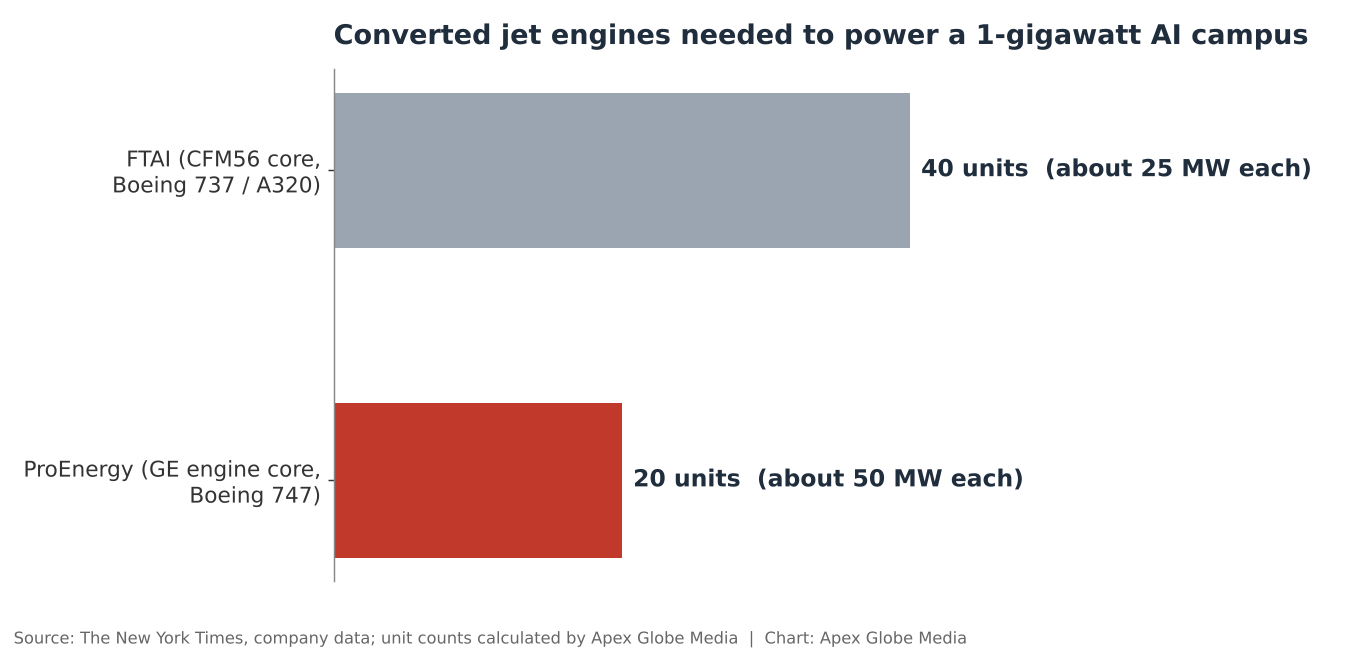
Missouri-based ProEnergy converts a General Electric engine core used in Boeing 747s into units that each produce about 50 megawatts, enough for roughly 15,000 homes, according to the company’s Landon Tessmer, quoted by the Times. It does not name its customers, but state permits and regulatory filings show that some of the largest AI companies, and power suppliers working on projects for Google, plan to use its turbines. FTAI Aviation, a jet-engine leasing and repair company, launched a conversion business last year that turns CFM56 engines from Boeing 737 and Airbus A320 jets into turbines of about 25 megawatts, and a joint venture it is part of signed a $1.5 billion supply deal with a data center developer in July.
Others are joining in. Boom Supersonic, the startup building a supersonic airliner, is adapting its engine work for data center power, and SpaceX has bought a maker of mobile gas turbines. There is plenty of raw material: the U.S. Energy Information Administration has estimated that engines from about 4,000 old military jets stored at a single desert base near Tucson, Arizona, could in theory produce 40,000 megawatts.
Why speed beats efficiency
The appeal is time. Data centers face waits of several years to connect to the grid, and new conventional gas turbines are sold out for years as well. A converted jet engine can get a site running in about 24 months. “The priority is getting power fast, regardless of cost or efficiency,” Rystad Energy analyst Audun Martinsen told the Times. Political pressure points the same way: President Trump said in August that data centers are “mandated by me” to build their own electricity supply rather than draw from the grid.
This is part of a wider scramble for power that is reshaping the energy industry, from nuclear plant upgrades to Google’s research into AI data centers in orbit. Big tech companies are spending record sums on AI infrastructure, and as we reported last week, that spending has begun to strain even the largest balance sheets.
The pollution problem
The catch is efficiency. Converted turbines burn more fuel for each unit of electricity than modern combined-cycle gas plants, so more of them are needed, and they produce more pollution. Elon Musk’s xAI has installed eight converted turbines to power a data center in Mississippi, according to state permits and satellite images. Those permits allow carbon monoxide emissions at twice the rate of other turbines at the site and a 25% higher limit for volatile organic compounds, Tom’s Hardware reported. The Southern Environmental Law Center has challenged the approvals. “Electric generation should be getting cleaner over time, not dirtier,” said the group’s Patrick Anderson.
There are practical problems too. Large arrays of turbines are expensive to maintain, need a steady supply of gas and produce a lot of heat and noise. Supporters argue they are a bridge: once a data center gets its grid connection, the turbines can become backup power or be moved to another site.
Our take
Turning retired jet engines into power plants is a clever piece of engineering recycling, and it shows how desperate the AI industry has become for electricity. But “temporary” energy infrastructure has a habit of becoming permanent, especially when grid connections keep slipping. If AI companies want public support for their expansion, they should treat these turbines as a short bridge with a clear end date, publish their emissions, and pay for cleaner long-term supply. Otherwise the communities living next to data centers will be the ones paying for the AI boom’s impatience, in the air they breathe.